

GLP-1 check-in and refill text templates for clinics
Copy-ready GLP-1 texts: welcome, injection-week check-in, running-low refill, and a quiet-patient follow-up. Clinic-approved. Staff handle anything clinical.

· 4 min read · Updated

GLP-1 patients can go a long time between appointments.
A lot can happen in that gap.
They may feel great.
They may be dealing with nausea or constipation.
They may forget a dose.
They may be getting close to a refill.
Or they may stop responding altogether.
You do not need a complicated chatbot to stay in touch.
A few well-timed texts can cover most of the basics.
These should be reviewed and approved by your clinical team for your own protocol.
1. Welcome text
Send this after the patient starts the program.
“Hi [First name], it’s the care team at [Clinic name]. We’ll check in with you here between visits. If anything feels off or you have a question, just reply to this thread. Reply STOP anytime to opt out.”
That is really all it needs to do.
The patient knows the number.
They know the clinic will check in.
And they know they can reply.
2. Injection-week check-in
A short check-in around injection day can give the clinic useful context before the next visit.
“Hi [First name], how are you feeling this week after your injection? Any nausea, constipation, appetite changes, or anything else you want us to know about?”
Keep it open enough that the patient can answer naturally.
You are not trying to diagnose over text.
You are trying to find out whether there is something the care team should see.
3. Running-low refill text
Do not wait until the patient is completely out.
If you know they are getting close to their next fill, reach out first.
“Hi [First name], it looks like you may be getting close to your next GLP-1 refill. Want us to start the refill request with the team?”
If they say yes, staff can take it from there.
That is much better than discovering three days later that the patient missed a dose because nobody started the refill.
The timing should follow the clinic’s actual refill process, not a generic calendar.
4. If the patient goes quiet
Not every missed reply needs another message.
People get busy.
But if someone has stopped responding for a while, one simple follow-up can make sense.
“Hi [First name], just checking in since we haven’t heard back. Everything going okay with your GLP-1 schedule? Reply here if you need us.”
Then stop.
Do not send three more automated messages because they ignored the first two.
If the clinic is concerned, a person can call.
A simple monthly rhythm
You do not need to make this complicated.
A basic first month might look like:
Day 0: Welcome
Week 1: Check-in
Week 2: Check-in
Week 3: Check-in
Before the next fill: Refill message
Before the next visit: Appointment confirmation if needed
That is a starting point, not a medical protocol.
The cadence should change based on the patient, the clinic, and the treatment plan.
The texts should not make treatment decisions
This is the important line.
The automation can ask the question.
It should not decide what the patient should do next.
If someone says they are having a problem, that reply should go to the appropriate person at the clinic.
If a dose needs to change, a clinician decides that.
If something needs to be documented, it goes into the normal clinical workflow.
The text is there to surface what is happening earlier.
Not to replace clinical judgment.
Keep the messages normal
Patients do not want to feel like they are talking to software.
Avoid:
“Please complete your weekly GLP-1 treatment adherence assessment.”
Just ask:
“How are you feeling this week?”
The best messages are usually the ones a real coordinator would have sent anyway.
Short.
Clear.
Easy to answer.
The goal is fewer surprises between visits
The point of these texts is not to create more patient communication for the sake of it.
It is to find out sooner when:
Someone is having a hard week.
A refill is coming up.
A patient stopped responding.
Something needs a person.
That gives the clinic more visibility between appointments without requiring staff to manually text every patient every week.
The automation handles the repetitive check-in.
The clinic handles the actual care.
Common questions
- What GLP-1 texts should clinics send between visits?
- Four basics cover a lot: a welcome after start, a short injection-week check-in, a running-low refill message before the next fill, and one quiet follow-up if someone stops responding. Have your clinical team approve the wording for your protocol.
- Should automated texts change a GLP-1 dose?
- No. Automation can ask the question. Clinicians decide dose changes and other treatment decisions. Route clinical replies to the right person.
- What if a GLP-1 patient ignores a check-in?
- Do not send three more automated messages. One simple follow-up can make sense after a stretch of silence. If the clinic is concerned, a person can call.
- How often should GLP-1 check-ins go out?
- A basic first month might be welcome on day 0, weekly check-ins, then a refill message before the next fill. Adjust the cadence to the patient, clinic, and actual fill cycle.
We cite public sources in the text where it matters. For operations and finance context only, not clinical, legal, or investment advice.
Keep reading
Weight-loss
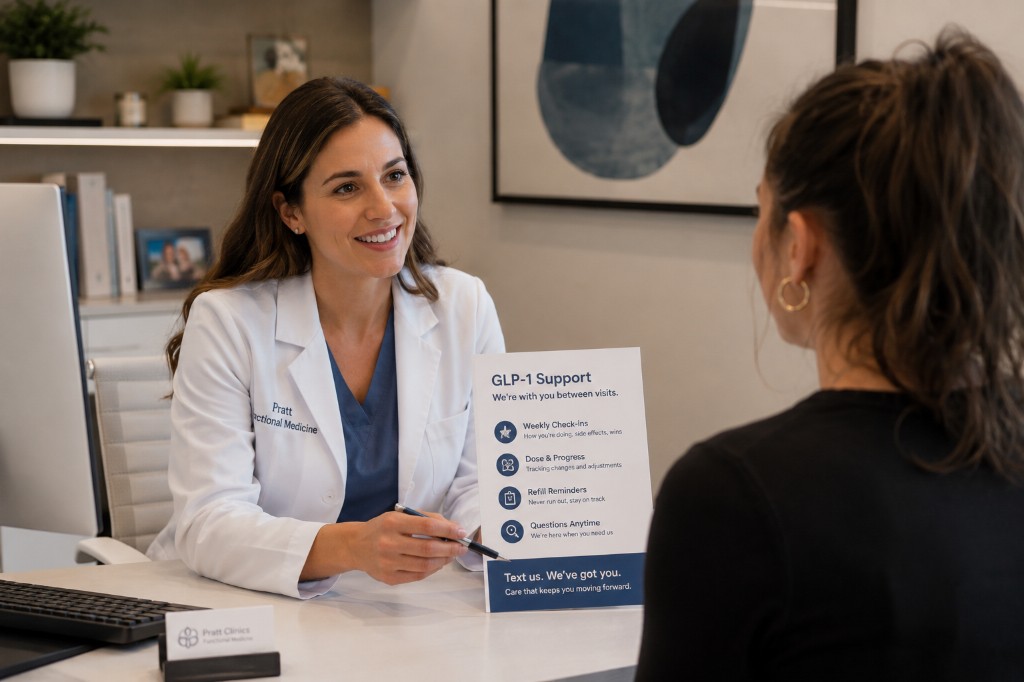
GLP-1 patient follow-up between monthly visits
Monthly GLP-1 visits leave a blind spot. Short injection-week check-ins, refill timing, and quiet-patient flags help the clinic learn sooner without another patient app.
· 3 min read
Habit
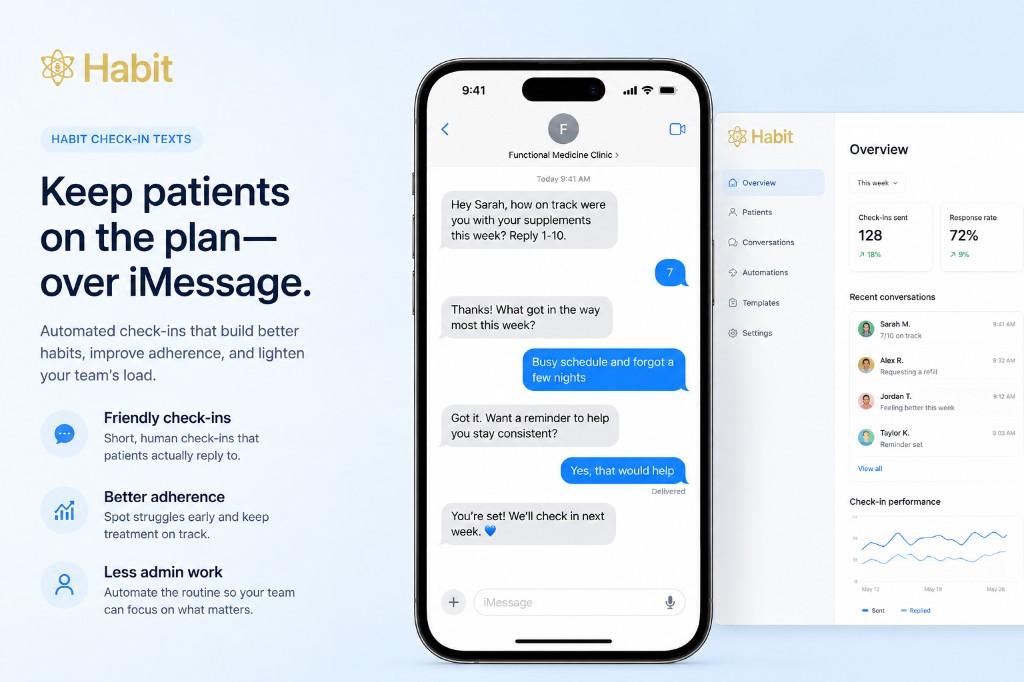
Habit check-in texts: keep patients on the plan between visits
Clinic-approved welcome, weekly check-in, and running-low texts on a schedule. Patients reply in the same thread. Staff step in when someone needs a person.
· 4 min read

Functional medicine
Texting workflows for functional medicine clinics
Four simple texts cover most of the gap: welcome, weekly check-in, running-low, and an optional pre-visit message. Short, normal, easy to answer.
· 3 min read
See it on your patients.
Two weeks free on your real patients. Habit texts on a Helose-issued number. Patients reply on iMessage.