

Habit check-in texts: keep patients on the plan between visits
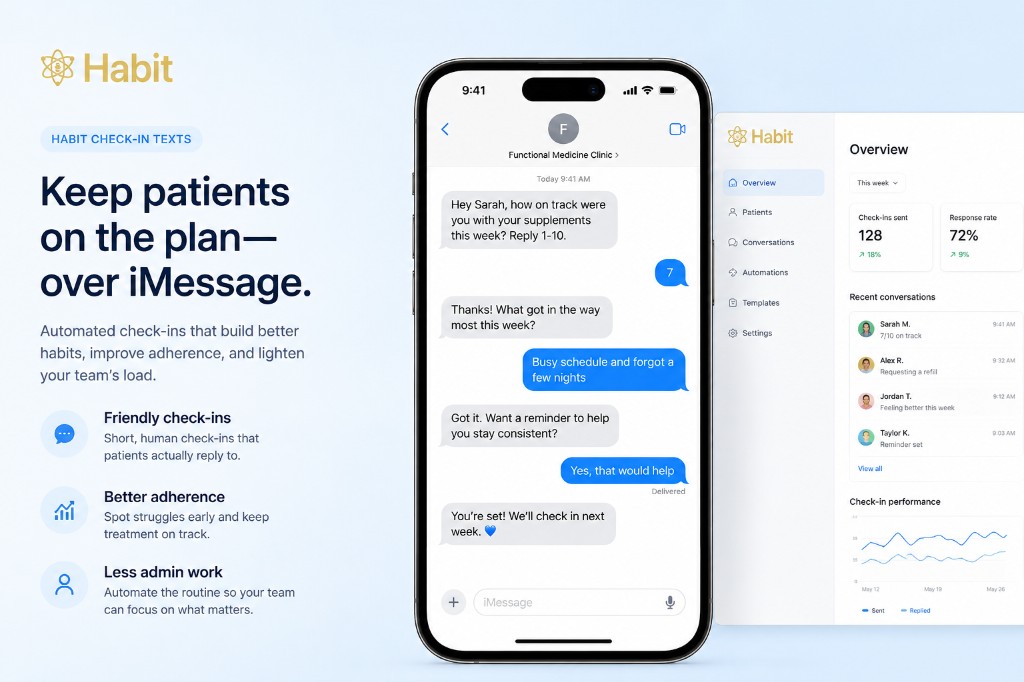
Clinic-approved welcome, weekly check-in, and running-low texts on a schedule. Patients reply in the same thread. Staff step in when someone needs a person.

· 4 min read · Updated
A patient leaves the clinic with a plan.
For the first few days, they are usually pretty motivated.
Then work gets busy.
They travel.
They forget the evening supplements.
A bottle starts getting low.
Something feels off, but not enough to call the office.
And by the time the next appointment comes around, the clinic is trying to reconstruct six weeks of real life in a 45-minute visit.
Habit is built for that gap.
It gives clinics a simple way to check in between visits without asking staff to manually text every patient.
The basic idea is simple
The clinic writes a few messages it wants patients to receive.
Usually something like:
A welcome message.
A weekly check-in.
A running-low refill message.
Those messages go out on the clinic’s schedule.
Patients reply in the same text thread.
If someone needs a person, staff step in.
That is really it.
The weekly check-in matters more than it sounds
A short message can tell you a lot.
“How are you doing with the plan this week?”
A patient might reply:
“Doing great.”
“I keep forgetting the evening dose.”
“I stopped one of the supplements.”
“I still haven’t done the labs.”
“I’m almost out.”
Without the check-in, the clinic may not hear any of that until the next appointment.
The goal is not to have a long conversation every week.
It is to know sooner when something starts to drift.
Refill timing is part of the same problem
Patients also fall off because they simply run out.
They may have been following the plan perfectly.
Then the bottle is empty.
They open Amazon.
They reorder whatever they can find.
Or they forget altogether.
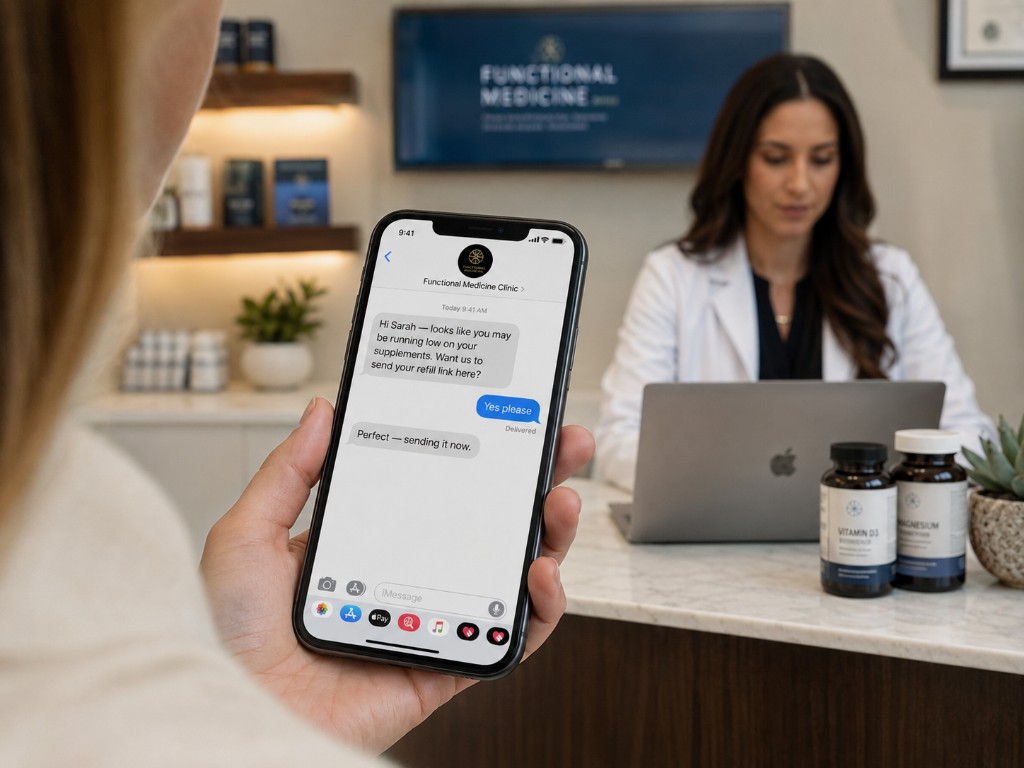
Habit can send a running-low message before that happens.
“Getting low on anything?”
If the patient needs a refill, the clinic can send its existing store or dispensary link in the same conversation.
No separate campaign.
No phone tag.
No hoping someone remembers to bring it up at the next visit.
Patients should not have to learn another system
This is a big part of why texting works.
Patients already know how to text.
They do not have to download a coaching app just to tell the clinic they forgot a supplement.
They do not have to remember another password.
They do not have to open a portal to answer one question.
They see a text from the clinic.
They reply.
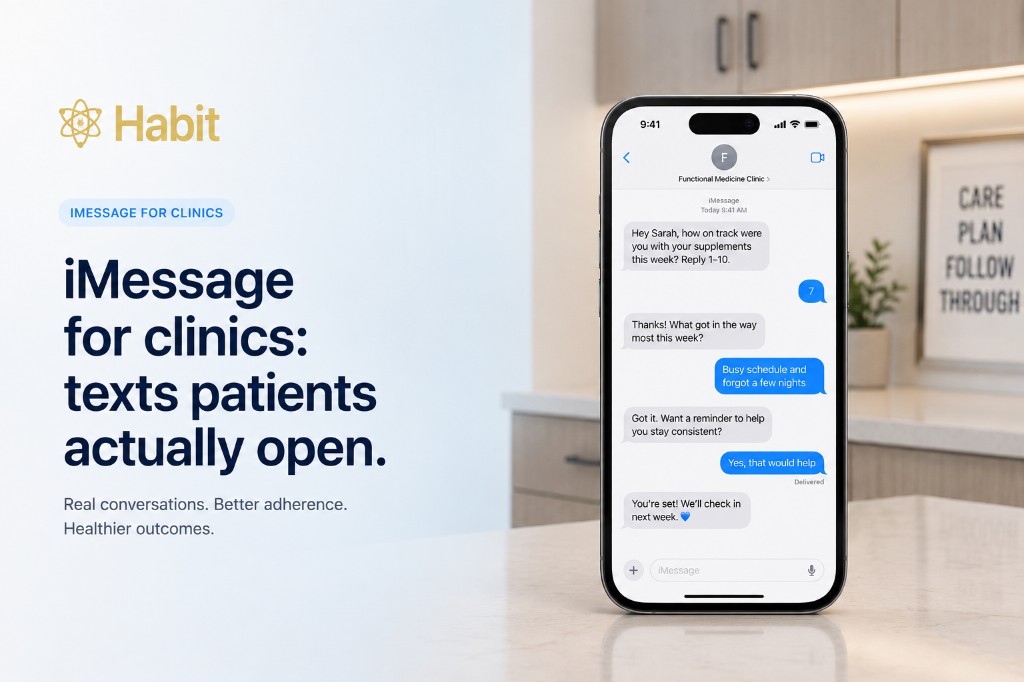
On supported Apple devices, that conversation can appear in iMessage. Otherwise, it can continue over SMS.
From the patient’s perspective, it is just the clinic texting them.
The clinic still writes the messages
Habit is not supposed to invent new patient conversations on its own.
The clinic decides what it wants to say.
The clinic approves the wording.
Habit handles the timing.
That distinction matters.
A weekly check-in does not need generative AI.
Neither does a refill reminder.
Most clinics already know what they want those messages to say.
The problem is making sure they actually go out every week.
Staff should only step in when they are needed
The repetitive part can run automatically.
The human part should stay human.
If a patient replies:
“All good.”
there may be nothing to do.
If they say:
“I stopped one of the supplements.”
“I’m having a problem.”
“I need help with my refill.”
then someone from the clinic can step in.
That is a much better use of staff time than manually starting every conversation themselves.
Habit does not replace the EHR
The chart is still the chart.
Habit is not where the clinic should rebuild its medical record.
It is there to handle the small conversations that tend to disappear between visits.
Check-ins.
Running-low messages.
Simple replies.
Then, when something actually needs clinical attention, the clinic handles it through the normal workflow.
The goal is not more texting
Nobody needs another system sending patients more notifications.
The point is to make the few messages that matter happen at the right time.
Check in before the patient has been off the plan for a month.
Ask about a refill before the bottle is empty.
Give the patient an easy way to reply when something changes.
And let staff spend their time on the patients who actually need them.
Habit is not meant to replace the relationship between the clinic and the patient.
It is meant to keep that relationship from disappearing between appointments.
Common questions
- What is Habit?
- Habit is Helose's between-visit playbook. The clinic writes and approves a few messages (welcome, weekly check-in, running-low). Habit sends them on schedule. Patients reply in the same text thread. Staff step in when someone needs a person.
- Do patients install an app for Habit check-ins?
- No. They already know how to text. On supported Apple devices the conversation can appear in iMessage. Otherwise it can continue over SMS.
- Does Habit invent the patient messages with AI?
- No. The clinic decides what to say and approves the wording. Habit handles the timing. A weekly check-in and refill reminder do not need generative AI.
- Does Habit replace the EHR?
- No. The chart is still the chart. Habit handles the small conversations that tend to disappear between visits. Clinical attention goes through the normal workflow.
We cite public sources in the text where it matters. For operations and finance context only, not clinical, legal, or investment advice.
Keep reading
iMessage
iMessage for clinics: a more natural way to text patients
Patients already use Messages all day. A clinic number they recognize beats short codes and portal notifications. iMessage when supported, SMS when not.
· 4 min read
Patient texting
Automated patient texting for clinics: check-ins and refills without the busywork
Automate welcome texts, weekly check-ins, and running-low reminders with clinic-approved copy. Patients reply by text. Staff step in when someone needs a person.
· 4 min read

Functional medicine
Texting workflows for functional medicine clinics
Four simple texts cover most of the gap: welcome, weekly check-in, running-low, and an optional pre-visit message. Short, normal, easy to answer.
· 3 min read
See it on your patients.
Two weeks free on your real patients. Habit texts on a Helose-issued number. Patients reply on iMessage.