

iMessage for clinics: a more natural way to text patients
Patients already use Messages all day. A clinic number they recognize beats short codes and portal notifications. iMessage when supported, SMS when not.

· 4 min read · Updated
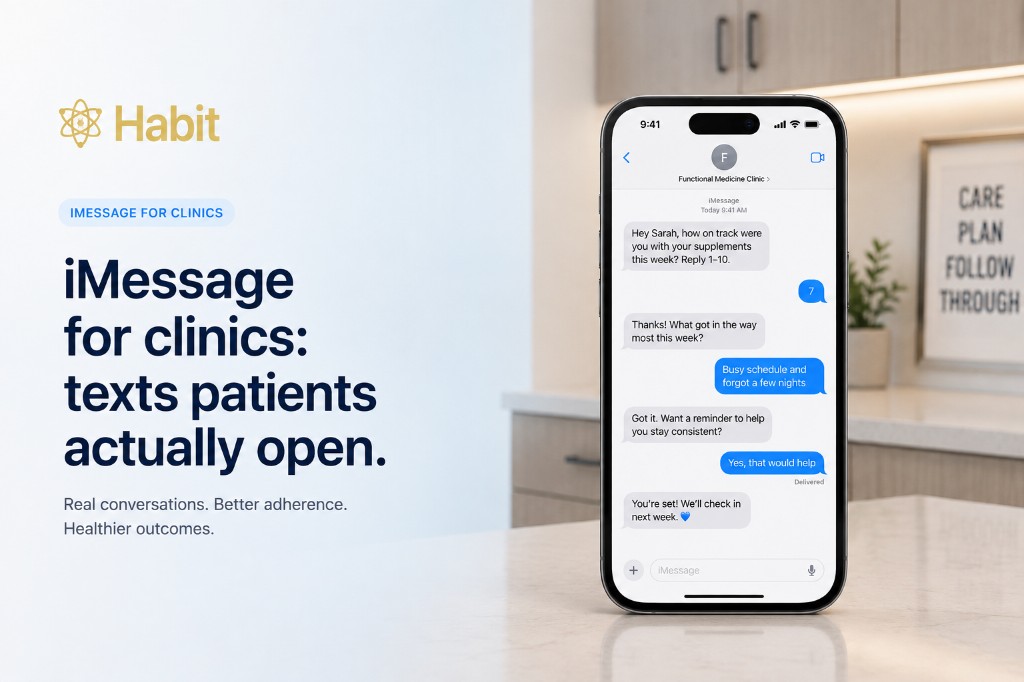
Most patients do not need another healthcare app.
They already have enough of them.
What they do use all day is Messages.
That is why some clinics are starting to think differently about patient texting.
Instead of sending another short-code reminder or portal notification, the clinic can text from a number the patient recognizes.
On an iPhone, that message may appear as iMessage.
On Android, it can fall back to SMS.
From the patient’s point of view, it is just a text from the clinic.
Why normal-looking texts matter
People have gotten very good at ignoring automated messages.
Unknown numbers.
Short codes.
“DO NOT REPLY” reminders.
Portal notifications that require a login.
A message from a saved clinic contact feels different.
It looks like a conversation.
That does not guarantee the patient will respond.
But it removes a lot of the friction before they even read the message.
iMessage is useful because patients already know how to use it
There is nothing new for the patient to learn.
They do not download anything.
They do not create another password.
They do not have to remember where the clinic’s messaging feature lives.
They see the message.
They reply.
That makes it a good fit for simple between-visit communication.
“How are you doing with the plan this week?”
“Getting low on anything?”
“Still good for Thursday at 10?”
Those are not complicated interactions.
They should not require complicated software on the patient side.
Android patients still need the same experience
A clinic cannot build its communication around iPhone users only.
If a patient does not use iMessage, the conversation still needs to work.
That usually means SMS.
The patient should not have to understand which technology is being used underneath.
They text the clinic number.
The clinic replies.
That is the experience that matters.
The blue bubble is not the reason patients stay engaged
It is easy to overstate the value of iMessage.
A blue bubble does not make a bad message useful.
If the clinic sends too often, patients will still get annoyed.
If the message sounds automated and irrelevant, they will still ignore it.
The real advantage is that the clinic can communicate in a place the patient already uses constantly.
The message still has to be worth reading.
One thread is better than five different systems
Patient communication gets messy fast.
One number for appointment reminders.
Another for marketing.
A portal for messages.
A separate app for coaching.
Someone at the front desk texting from somewhere else.
Now the patient does not know where to reply.
A cleaner experience is one patient-facing clinic number that stays consistent.
The patient saves it.
Check-ins happen there.
Refill questions happen there.
Simple replies happen there.
If something needs to move into the portal or EHR, the clinic can handle that behind the scenes.
This is not the same thing as staff using personal iMessage
This distinction matters.
A clinic-controlled messaging system that can deliver messages through iMessage is not the same as a physician texting patients from their personal iPhone.
The patient experience may look similar.
The setup behind it is not.
Clinics still need the right vendor relationships, access controls, logging, and policies when patient information is involved.
Apple does not make a clinic HIPAA compliant because the message shows up as iMessage.
The healthcare workflow behind the message is what matters.
Keep the texts simple
The best use cases are usually the boring ones.
A weekly check-in.
A refill reminder.
A lab reminder.
A quick pre-visit question.
A message asking whether something changed.
You do not need to recreate the patient portal inside Messages.
And you definitely do not need every text to become a long clinical conversation.
Texting works best when the patient can understand the message and reply in a few seconds.
Automation can stay behind the scenes
A coordinator should not have to manually send the same message to 100 patients every week.
The clinic can approve the wording once.
The messages can go out on schedule.
Patients reply normally.
Staff step in when somebody actually needs help.
The patient does not need to think about any of that.
They just see a message from the clinic.
iMessage is a channel, not the product
The useful part is not really the blue bubble.
It is what the clinic can do with a familiar text thread.
Stay in touch after the appointment.
Hear about problems sooner.
Catch refills before the patient runs out.
Give patients an easy way to answer without logging into something.
That is the reason iMessage can be useful in a clinic.
It makes patient communication feel a little less like healthcare software and a little more like a normal conversation.
Common questions
- What is healthcare iMessage for clinics?
- Clinic texts from a number the patient recognizes. On an iPhone the message may appear as iMessage. On Android it can fall back to SMS. From the patient's point of view, it is just a text from the clinic.
- Does Apple make clinic texting HIPAA compliant?
- No. Apple does not make a clinic HIPAA compliant because the message shows up as iMessage. Clinics still need the right vendor relationships, access controls, logging, and policies when patient information is involved.
- What about Android patients?
- The conversation still needs to work, usually over SMS. The patient should not have to understand which technology is underneath. They text the clinic number. The clinic replies.
- Is a clinic iMessage system the same as staff texting from personal phones?
- No. A clinic-controlled messaging system is not the same as a physician texting from a personal iPhone. The patient experience may look similar. The setup behind it is not.
We cite public sources in the text where it matters. For operations and finance context only, not clinical, legal, or investment advice.
Keep reading
Habit
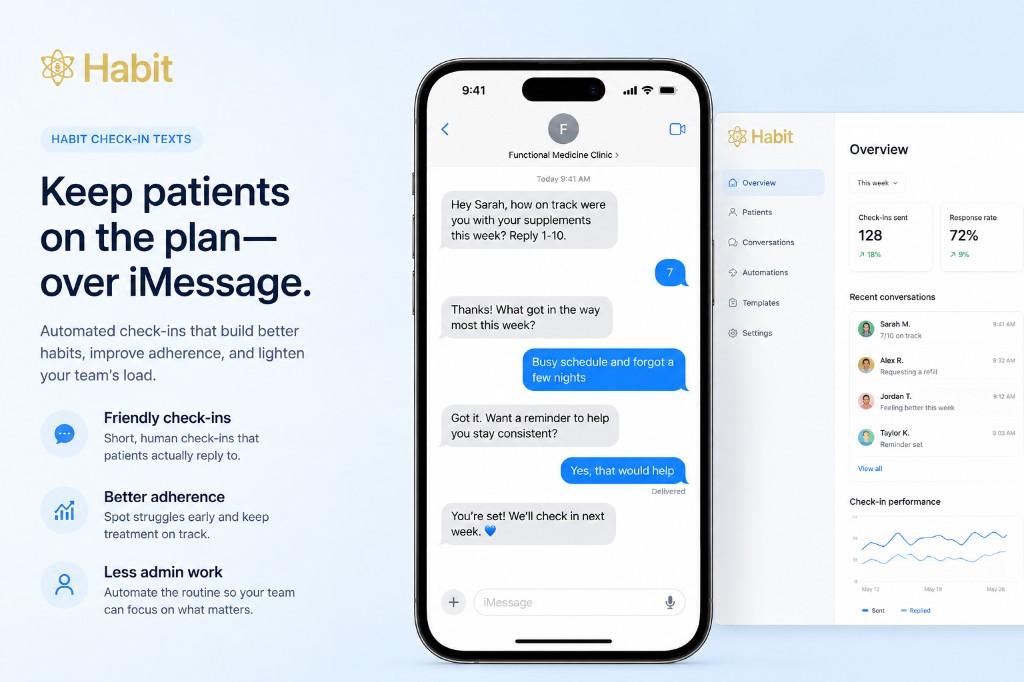
Habit check-in texts: keep patients on the plan between visits
Clinic-approved welcome, weekly check-in, and running-low texts on a schedule. Patients reply in the same thread. Staff step in when someone needs a person.
· 4 min read
Patient texting
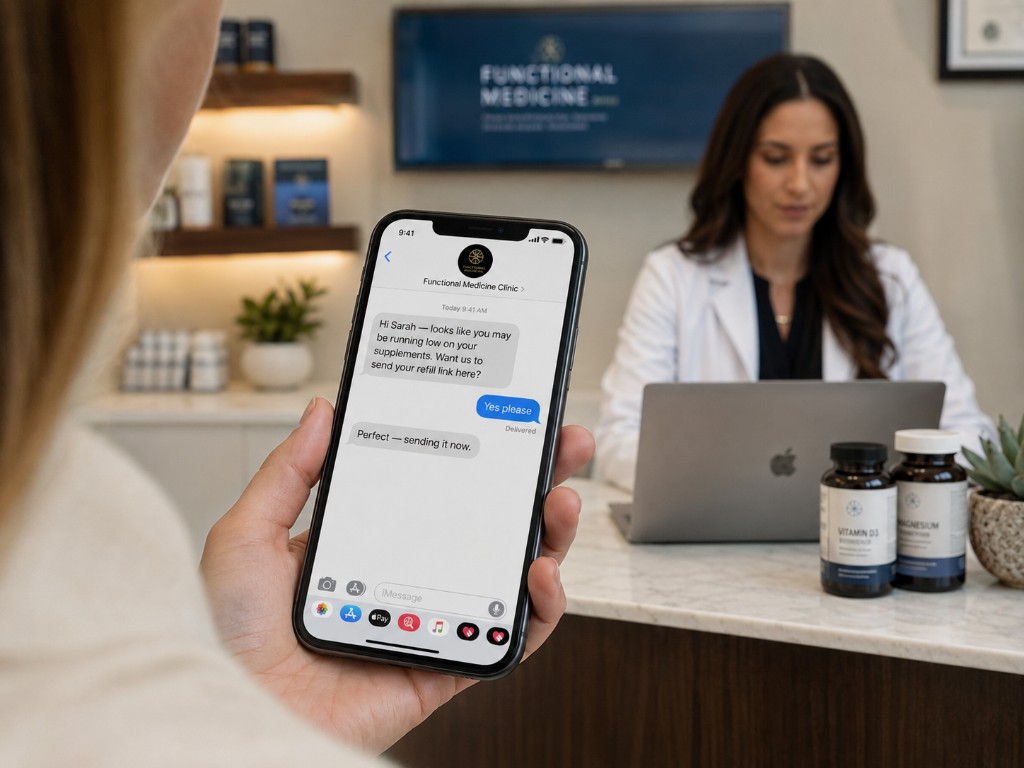
Automated patient texting for clinics: check-ins and refills without the busywork
Automate welcome texts, weekly check-ins, and running-low reminders with clinic-approved copy. Patients reply by text. Staff step in when someone needs a person.
· 4 min read
Security
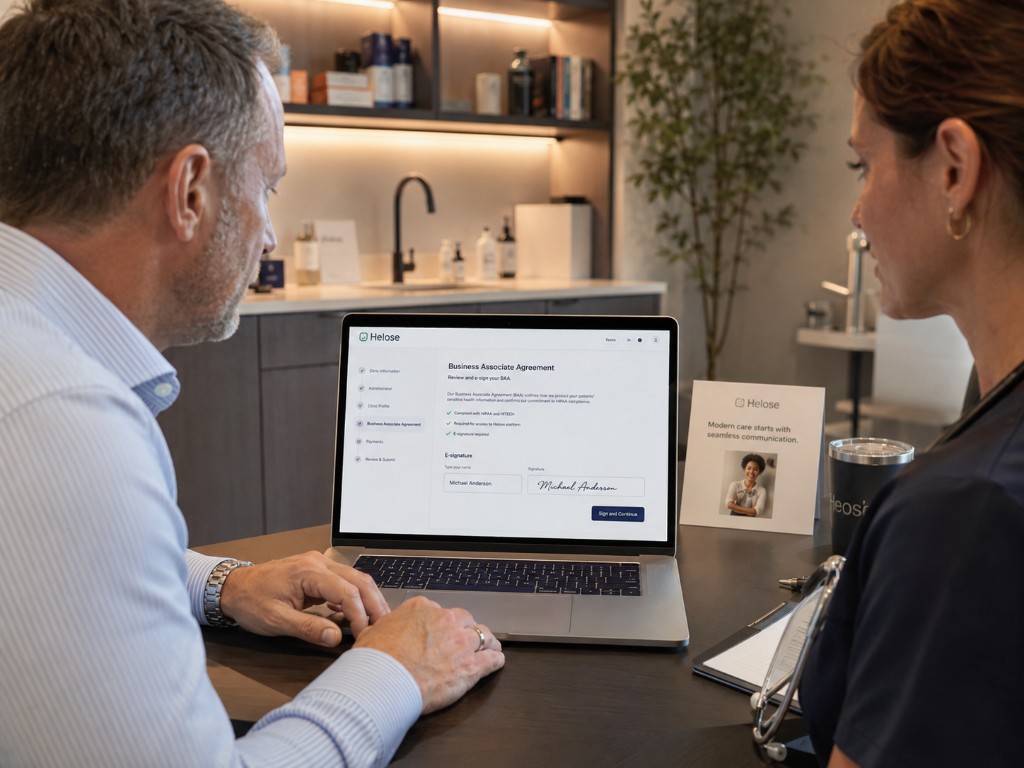
HIPAA BAA at clinic signup: what it covers and what it does not
Click-through Business Associate Agreement before PHI-touching texting runs. Checklist for practice administrators comparing vendors.
· 2 min read
See it on your patients.
Two weeks free on your real patients. Habit texts on a Helose-issued number. Patients reply on iMessage.