

Patient check-in texts for functional medicine clinics
Functional medicine plans fall apart between visits. A short weekly check-in text — not a survey or portal blast — helps clinics see what is actually happening before the next appointment.

· 4 min read · Updated
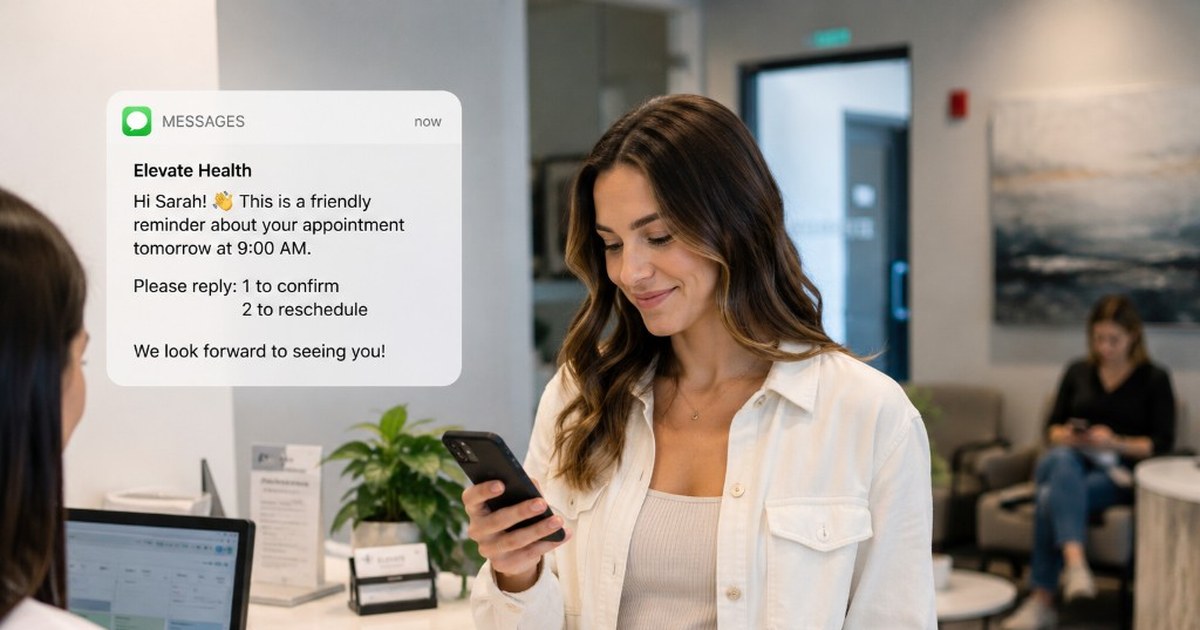
Functional medicine visits tend to cover a lot.
A patient may leave with new supplements, diet changes, labs to complete, and a handful of things they are supposed to pay attention to over the next few weeks.
Then they go home.
And unless something goes wrong, the clinic may not hear from them again until the next appointment.
That gap is where a lot of plans start to fall apart.
A short check-in text can help.
Not a survey. Not another portal notification. Just a simple message from the clinic asking how things are going.
Functional medicine follow-up is a little different
A normal appointment reminder is easy.
“Your appointment is Tuesday at 2.”
Between-visit follow-up is harder because the patient may be juggling several things at once.
They might be taking six supplements with different bottle sizes.
They might be trying to change breakfast, sleep more, stop drinking during the week, and remember a lab kit sitting on the kitchen counter.
Then they travel for three days and half the routine disappears.
That is normal.
The point of a check-in is not to police the patient.
It is to find out what is actually happening before another month passes.
Keep the messages simple
You do not need to ask ten questions every week.
In fact, you probably should not.
One useful question is usually enough.
“How are you doing with your supplements this week?”
“Anything getting in the way of the plan?”
“Did you get your lab kit sent back?”
“Getting low on anything?”
The goal is to make it easy for someone to answer.
A patient is much more likely to reply to one normal question than open a long form and complete a weekly assessment.
Weekly is usually enough
You do not need to text patients every day.
For a lot of clinics, one check-in a week is plenty.
Pick a consistent day.
Ask one useful question.
Then leave the patient alone unless there is a reason to follow up.
You can handle other messages separately when they actually matter.
If someone is likely to run out of a supplement next week, send the refill message then.
If a lab is due, remind them around that time.
If they have an appointment coming up, a short pre-visit message may make sense.
The timing should follow the patient’s plan, not whatever day happens to be convenient for the software.
The replies are where the value is
The outbound message is the easy part.
The useful part is what comes back.
“Doing great.”
“I keep forgetting the evening dose.”
“I stopped taking one of them.”
“I haven’t done the labs yet.”
“I’m almost out.”
“I’ve felt worse this week.”
Now the clinic knows something it would otherwise have learned at the next visit.
Not every reply needs a physician.
Most probably do not.
But the ones that matter can be surfaced to the right person instead of disappearing for four weeks.
Do not turn the clinic into a call center
This should not create another job for staff.
Someone should not have to manually text 150 patients every Wednesday.
The repetitive part can run automatically.
The clinic decides what the message says.
The message goes out at the right time.
Patients reply normally.
Staff get involved when there is actually something to handle.
That is the useful version of automation.
It saves the human attention for situations where human attention matters.
Texting works because the patient already knows how to use it
Patients do not need another app just to tell you they forgot a supplement.
They already know how to text.
If the clinic has a patient-facing number, the conversation can stay in the same place over time.
On an iPhone, that may appear as iMessage when supported.
On Android, it can continue over SMS.
From the patient’s perspective, the important part is simpler:
they are texting the clinic.
That is a much lower-friction experience than another login or portal notification.
What happens when someone stops replying?
Sometimes nothing.
People get busy.
Not every missed response means the patient is struggling.
But repeated silence can still be useful information.
If someone who normally replies suddenly goes quiet for several weeks, the clinic may want to take a closer look before the next appointment.
The point is not to chase every person who misses a text.
It is to have a little more visibility into what is happening between visits.
Patients should be able to opt out
Some people will love weekly check-ins.
Some will find them annoying.
That preference should be respected.
Let patients stop the messages.
Adjust the frequency when it makes sense.
Do not keep sending more messages because somebody did not answer the first one.
The system should feel helpful, not needy.
Start small
A functional medicine clinic does not need a complicated engagement program to get value from between-visit texting.
Start with three moments:
A welcome message after the patient begins.
One short weekly check-in.
A running-low message before they need another bottle.
That alone gives the clinic a much better chance of seeing what is happening between appointments.
And when something does start to go off track, you find out while there is still time to do something about it.
Common questions
- How often should functional medicine clinics send check-in texts?
- Weekly on a consistent day is usually enough. Ask one useful question. Handle refill, lab, and pre-visit messages separately when they actually matter for that patient's plan.
- Do patients need an app for FM check-ins?
- No. They already know how to text. On iPhone the conversation may appear as iMessage when supported. On Android it can continue over SMS. From their perspective they are texting the clinic.
- What should a functional medicine check-in ask?
- One simple question: how supplements are going, whether anything is getting in the way, whether a lab kit went out, or whether they are getting low. Not ten questions and not a weekly assessment form.
- What if a patient stops replying?
- Sometimes nothing. People get busy. Repeated silence can still be useful. Do not chase every missed text, and let patients opt out. Adjust frequency when it makes sense.
We cite public sources in the text where it matters. For operations and finance context only, not clinical, legal, or investment advice.
Keep reading

Functional medicine
Texting workflows for functional medicine clinics
Four simple texts cover most of the gap: welcome, weekly check-in, running-low, and an optional pre-visit message. Short, normal, easy to answer.
· 3 min read

Supplement adherence
How to text patients about supplement adherence
Supplement plans slip between visits. Ask one normal question by text, listen for why someone fell off, and catch running-low before they buy elsewhere.
· 4 min read
Habit
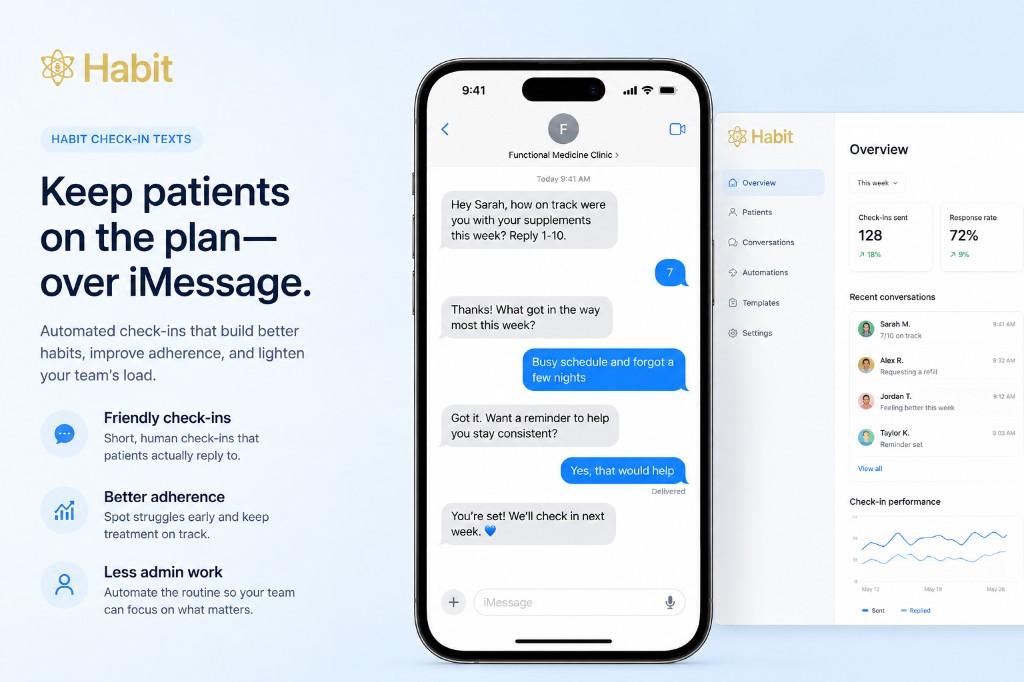
Habit check-in texts: keep patients on the plan between visits
Clinic-approved welcome, weekly check-in, and running-low texts on a schedule. Patients reply in the same thread. Staff step in when someone needs a person.
· 4 min read
See it on your patients.
Two weeks free on your real patients. Habit texts on a Helose-issued number. Patients reply on iMessage.