

HIPAA, SMS, and iMessage for clinics: what practice owners need to know
A blue bubble is not a compliance certificate. What matters is PHI handling, BAAs, access controls, and clinic-controlled systems — not SMS vs iMessage alone.

· 4 min read · Updated
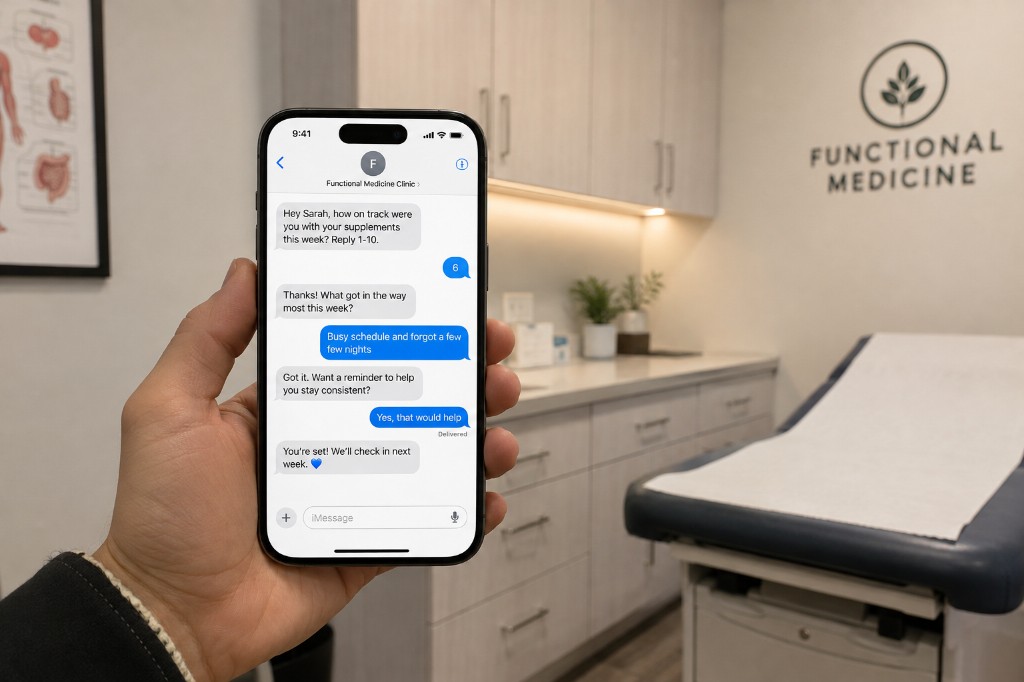
Clinics ask the same question all the time:
Can we text patients?
The short answer is yes.
But whether the message shows up as SMS or iMessage is not the part that makes the workflow compliant.
What matters is what information is being sent, which systems handle it, who can access it, and whether the vendors involved have the right agreements and safeguards in place.
That distinction gets missed a lot.
iMessage is not automatically “HIPAA compliant”
A blue bubble does not tell you anything about your HIPAA setup.
It just tells you how the message appeared on the patient’s phone.
If a clinic is using a healthcare messaging platform that supports iMessage on the patient side, the patient may see a normal iMessage thread.
That can be a great patient experience.
But Apple is not suddenly acting as your HIPAA business associate because the bubble is blue.
The compliance work still sits behind the scenes.
SMS is not automatically compliant either
The same thing applies to ordinary SMS.
There is no magic “HIPAA-compliant SMS” button.
A texting workflow becomes appropriate for PHI because of how the platform is set up and used.
That generally means things like:
A signed Business Associate Agreement with the vendor handling PHI.
Appropriate encryption and security controls.
Staff access controls.
Auditability.
A process for handling opt-outs and consent.
And clear rules about what staff should and should not send.
The channel alone does not solve any of that.
Personal phones are where clinics get into trouble
The easiest setup is often the riskiest one.
A staff member saves the patient’s number.
They text from their personal iPhone.
The conversation lives in their personal Messages app.
Now the clinic may have no central access, no audit trail, no clean way to manage the thread when that employee leaves, and no BAA covering the consumer messaging setup.
That is very different from using a clinic-controlled platform where staff access the conversation through an approved system.
The patient may not notice much difference.
Operationally, there is a big one.
Keep text messages short and appropriate for the channel
Not every healthcare message needs to contain clinical detail.
A lot of useful texts are simple.
“Just checking in — how are you doing this week?”
“Your appointment is Thursday at 10.”
“Getting low on anything?”
“Your results are ready. Please review them before your visit.”
The more sensitive or detailed the conversation becomes, the more important it is to use the right clinical workflow and make sure the information is documented where it belongs.
Texting can be the front door to a conversation without becoming the place where every clinical decision lives.
What a BAA actually does
A Business Associate Agreement is not a badge that makes software safe.
It is an agreement that defines how a vendor handling PHI on behalf of the clinic is expected to protect that information and what happens if something goes wrong.
If a messaging vendor is creating, receiving, maintaining, or transmitting PHI for the clinic, that relationship needs to be handled appropriately.
That is why “the messages are encrypted” is not enough by itself.
Encryption matters.
So do access controls, subcontractors, breach responsibilities, and how the clinic actually uses the product.
Patient consent still matters
HIPAA is not the only thing clinics need to think about when texting.
Patients should know what they are opting into.
They should know which clinic is messaging them.
They should have a clear way to stop messages.
And the clinic should not treat consent to one kind of message as permission to send anything it wants forever.
The operational details matter just as much as the technology.
iMessage can still be useful
None of this means clinics should avoid iMessage.
A familiar-looking thread can be easier for patients to notice and respond to than another portal notification or an unfamiliar short code.
That can make iMessage useful for simple between-visit communication.
The important thing is not to confuse patient experience with compliance.
The patient sees the message.
The clinic still needs the right system behind it.
The simplest way to think about it
Do not ask:
“Is SMS HIPAA compliant?”
or:
“Is iMessage HIPAA compliant?”
Ask:
“Is our patient texting workflow appropriate for PHI?”
That gets you to the questions that actually matter:
Who is handling the message?
Is there a BAA where one is required?
Who can access the conversation?
Is the information protected?
Can the clinic audit what happened?
Are staff using a clinic-controlled system instead of personal accounts?
Does the patient understand what they are opting into?
Those questions are much more useful than the color of the bubble.
Texting can be a great way to stay in touch with patients.
It just needs to be treated like part of the clinic’s communication system, not like a casual text from somebody’s personal phone.
Common questions
- Is iMessage HIPAA compliant?
- A blue bubble does not tell you anything about HIPAA. Apple is not your business associate because a message appears as iMessage. Compliance depends on the healthcare vendor, agreements, and how the clinic uses the system.
- Is SMS HIPAA compliant?
- Not automatically. There is no magic HIPAA-compliant SMS button. Appropriateness for PHI comes from BAA, encryption and security controls, access controls, auditability, consent and opt-out processes, and clear rules about what staff send.
- Why is texting patients from personal phones risky?
- The conversation lives in a personal Messages app with no central clinic access, weak audit trail, messy handoff when staff leave, and usually no BAA covering consumer messaging. Use a clinic-controlled platform instead.
- What should clinics ask instead of 'is SMS HIPAA compliant?'
- Is our patient texting workflow appropriate for PHI? Who handles the message, is there a BAA where required, who can access the thread, can we audit it, and does the patient understand what they opted into?
We cite public sources in the text where it matters. For operations and finance context only, not clinical, legal, or investment advice.
Keep reading
Security
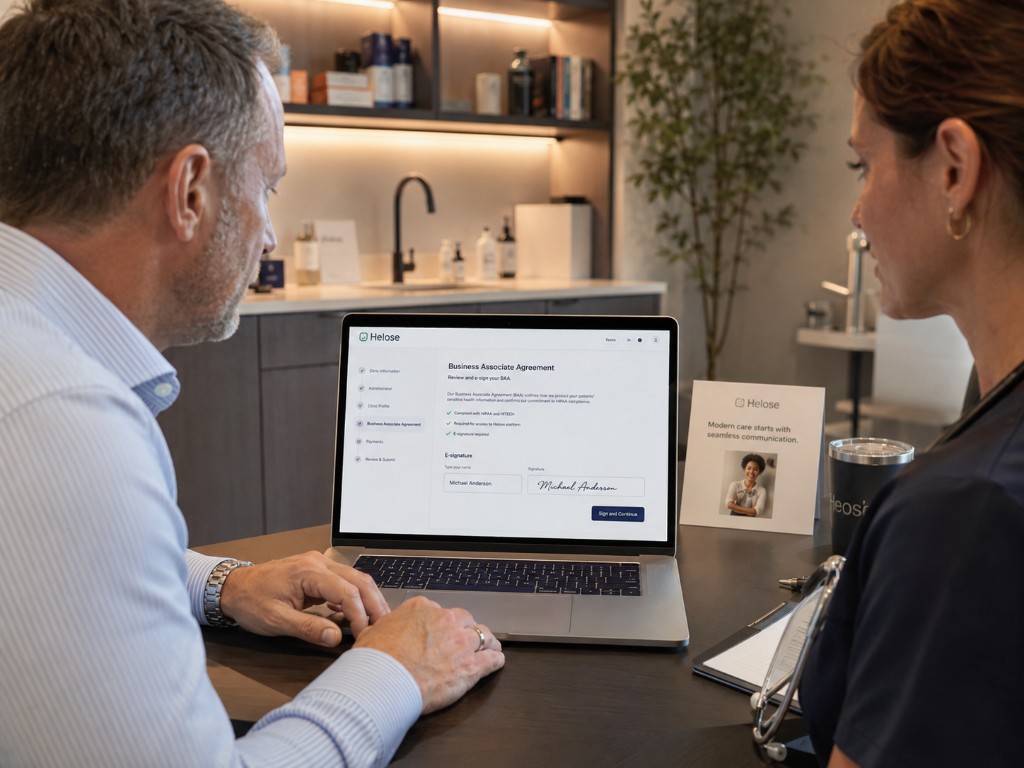
HIPAA BAA at clinic signup: what it covers and what it does not
Click-through Business Associate Agreement before PHI-touching texting runs. Checklist for practice administrators comparing vendors.
· 2 min read
iMessage
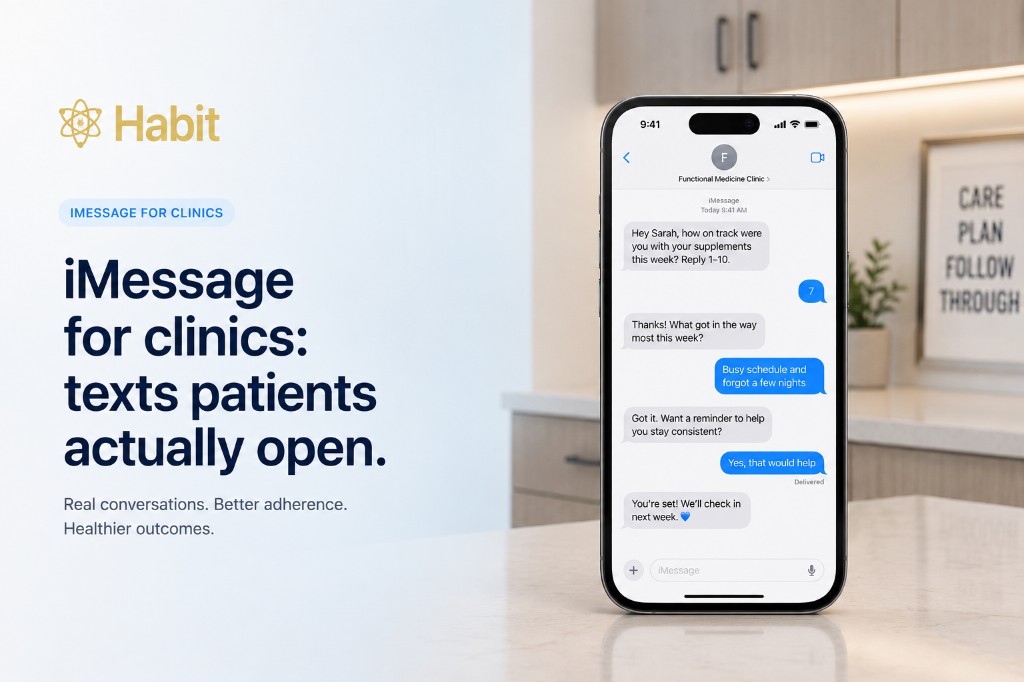
iMessage for clinics: a more natural way to text patients
Patients already use Messages all day. A clinic number they recognize beats short codes and portal notifications. iMessage when supported, SMS when not.
· 4 min read
Patient texting
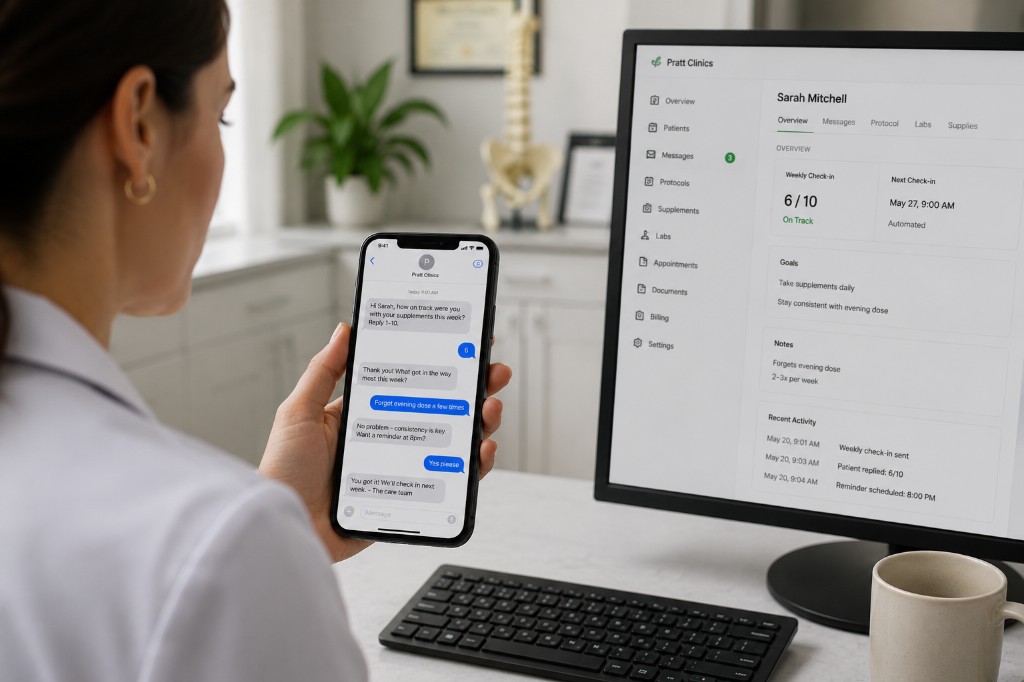
Automated patient follow-up without patient-facing AI
Automate welcome texts, weekly check-ins, and running-low reminders with clinic-approved copy. No chatbot. Staff step in when a reply needs a person.
· 4 min read
See it on your patients.
Two weeks free on your real patients. Habit texts on a Helose-issued number. Patients reply on iMessage.