

Your patient bought the supplement on Amazon. Now what?
Patients reorder on Amazon because the clinic missed the moment they needed another bottle. Reach them earlier, send a reorder link in the same text thread, and listen when they say why they shop elsewhere.

· 5 min read · Updated
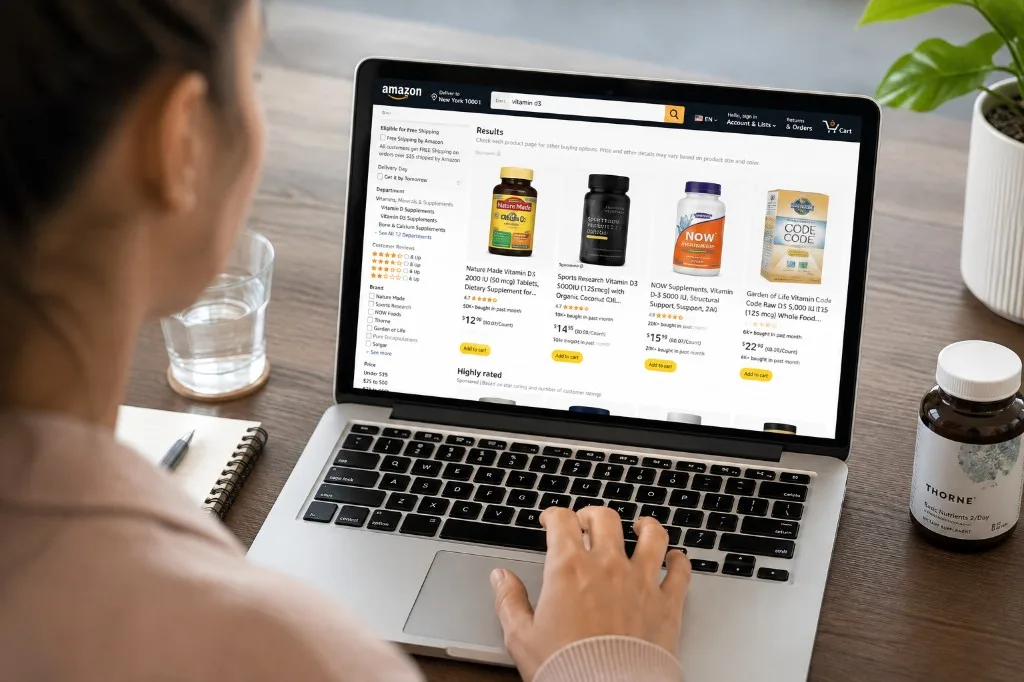
You recommend a supplement. The patient buys it through your dispensary once.
Then, a month or two later, they need another bottle.
They’re already on Amazon. They see what looks like the same product. It can arrive tomorrow.
So they order it there.
That’s usually all that happened.
It’s easy to treat this as a patient loyalty problem or a supplement education problem. Most of the time, it’s neither. Your clinic simply wasn’t part of the moment when they needed to reorder.
And once that happens, you lose more than the sale.
Amazon usually wins on timing
Patients are not sitting at home comparing dispensary strategies.
They notice they’re almost out of something, open the fastest place to buy it, and move on with their day.
If your clinic only finds out at the next appointment, Amazon had a three-week head start.
That creates a few problems.
You lose the reorder revenue. Your staff may not know exactly what the patient bought or where it came from. And the physician ends up spending part of the next visit figuring out whether the patient stayed on the original plan.
None of this requires a complicated solution.
You just need to reach the patient earlier.
The bigger issue is knowing what they actually bought
Buying supplements on Amazon does not automatically mean the product is fake or bad.
Plenty of legitimate products are sold there.
The problem is that a clinic has less control over the path the product took before it reached the patient.
Professional supplement brands often have authorized distribution channels for a reason. Marketplace listings can involve third-party sellers, diverted inventory, different storage conditions, or products that have been sitting somewhere longer than anyone realizes.
Independent marketplace testing has also found examples of supplements that did not match their labels for potency or ingredients.
That doesn’t mean you need to scare patients away from Amazon.
It does mean there is value in knowing where the product came from — especially when the supplement is part of a plan you’re actively tracking.
Sending more refill blasts probably isn’t the answer
The obvious response is:
“Fine. We’ll just text everyone when it’s time to reorder.”
That can help, but blasting generic refill reminders is not much of a strategy by itself.
Large studies of medication reminder texts have found that reminders may help close some short-term gaps without producing much improvement in long-term persistence.
That makes intuitive sense.
People don’t stop following plans because they forgot how calendars work.
They travel. They change routines. The supplement bothers their stomach. They think it isn’t doing anything. It costs too much. They forget the evening dose for two weeks and quietly give up.
A message that says “Time to reorder!” does not uncover any of that.
A message that starts a conversation can.
Reach them while there is still something left in the bottle
The best time to find out whether someone is staying on the plan is not three weeks after they ran out.
It’s while they still have enough left to do something about it.
Something as simple as:
“How are you doing with your supplements this week?”
or:
“Looks like you may be getting low on a few things. Want us to send your reorder link?”
Now the clinic has a chance to hear:
“I still have plenty.”
“I stopped taking that one.”
“It’s too expensive.”
“I’ve been forgetting it.”
“Yep, send me the link.”
That is much more useful than discovering everything during the next appointment.
Make buying through the clinic as easy as buying somewhere else
This part matters just as much as the reminder.
If the patient has to remember a portal password, find the correct supplement, fill out another form, or call your front desk, you have already lost a lot of people.
Amazon has trained everyone to expect almost no friction.
Clinics do not need to recreate Amazon. They just need to stop making a simple reorder unnecessarily difficult.
If you already text patients between visits, the reorder can happen in the same conversation.
Patient says they’re running low.
Clinic sends the correct Fullscript or store link.
Patient taps it and reorders.
Done.
No phone tag. No sticky note for the coordinator. No “I’ll remember to do that later” portal task.
You’re not going to keep every reorder
And you probably shouldn’t try.
Some patients are going to shop on price no matter what you do.
Some will prefer Amazon.
Some will decide they do not want the supplement anymore.
That’s fine.
The opportunity is not getting to 100% refill capture.
It’s preventing the completely avoidable losses — the patient who would have happily reordered through you if somebody had reached them three days earlier.
Those are the patients worth fixing the workflow for.
A better refill workflow is pretty simple
For most independent clinics, it comes down to three things:
- Check in before the patient runs out.
- Give them a reorder link in the conversation they already use.
- Pay attention when they tell you why they aren’t reordering.
That last part is easy to overlook.
A patient buying somewhere else may be telling you that your price is too high, your reorder process is annoying, they are unsure whether the supplement is working, or they stopped taking it altogether.
That is useful information.
And it is much better to hear it between visits than twenty minutes into the next one.
The goal isn’t to beat Amazon
You probably won’t.
The goal is to stop letting Amazon be the first one to notice your patient needs another bottle.
Helose helps clinics run those between-visit check-ins and running-low messages from a dedicated clinic number. When a patient wants a refill, the request goes back to the clinic and the patient can be sent directly to the clinic’s existing store or Fullscript checkout.
The clinic still owns the recommendation, the relationship, and the sale.
You just get there before the bottle is empty.
Common questions
- Why do patients reorder supplements on Amazon instead of through the clinic?
- Usually timing, not disloyalty. They notice they're almost out, open the fastest place to buy, and move on. If the clinic only finds out at the next visit, Amazon already had a head start.
- Are Amazon supplements fake or unsafe?
- Not automatically. Plenty of legitimate products are sold there. The issue for clinics is less control over the path the product took: third-party sellers, diverted inventory, storage, and age on the shelf. Independent marketplace testing has also found products that did not match their labels.
- Do refill reminder texts fix the problem?
- Generic one-way refill blasts can help some short-term gaps, but large medication-reminder studies show little gain in long-term persistence. A message that starts a conversation works better than a blast that only says it's time to reorder.
- What should clinics do instead of chasing every Amazon order?
- Check in before the bottle is empty, send the correct store or Fullscript link in the thread patients already use, and pay attention when someone says why they aren't reordering through you. Aim for the avoidable losses, not 100% capture.
We cite public sources in the text where it matters. For operations and finance context only, not clinical, legal, or investment advice.
Keep reading
Functional medicine
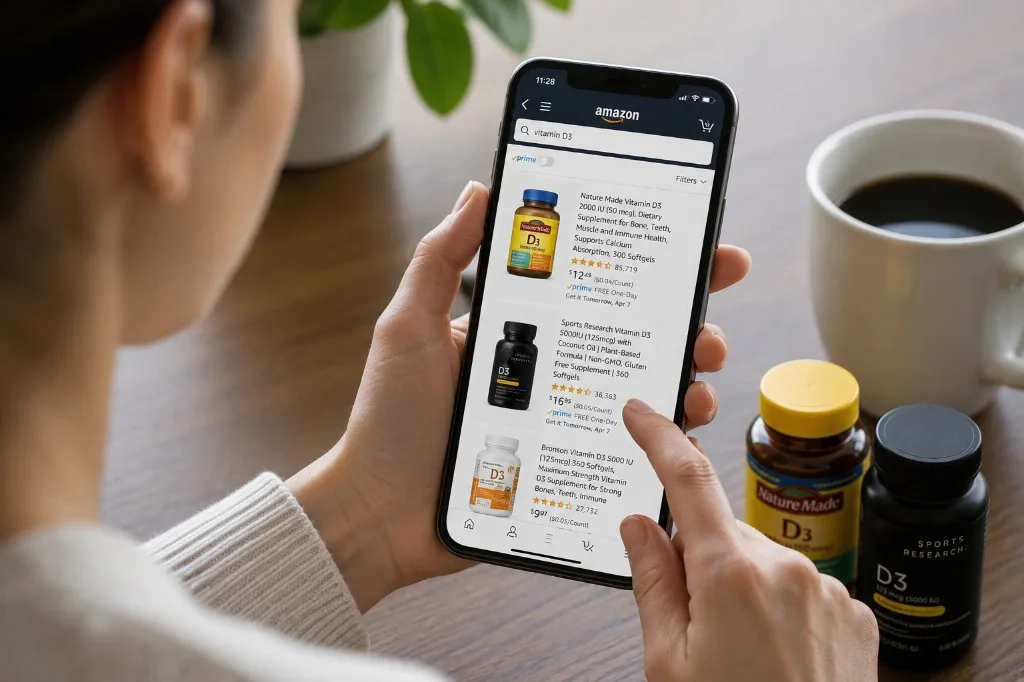
Professional supplements vs. Amazon: same label, different path
Same brand on the label does not mean the bottle took the same path. Why clinics care about authorized channels, what to tell patients without a lecture, and how convenience beats education.
· 4 min read

Clinic operations
Stop chasing supplement refills by hand
Manual refill call lists fall apart when the clinic gets busy. Reach patients before the bottle is empty, send the reorder link in the same text thread, and let staff handle exceptions.
· 4 min read

Patient Store
How to reduce lost supplement and refill revenue
Refill revenue disappears between visits when patients run low and buy elsewhere. Reach them earlier, send the reorder link, and stop making staff chase everyone by hand.
· 4 min read
See it on your patients.
Two weeks free on your real patients. Habit texts on a Helose-issued number. Patients reply on iMessage.