

Professional supplements vs. Amazon: same label, different path
Same brand on the label does not mean the bottle took the same path. Why clinics care about authorized channels, what to tell patients without a lecture, and how convenience beats education.

· 4 min read · Updated
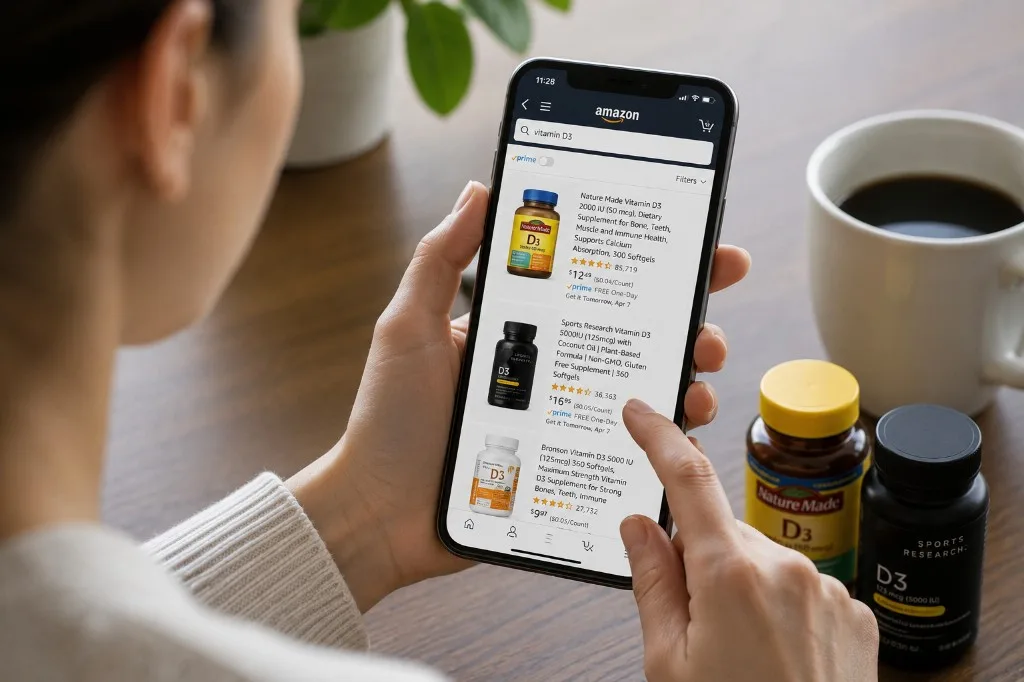
A patient brings in a bottle of the supplement you recommended.
The label looks right. Same brand. Same product. Maybe even the same dosage.
But they bought it on Amazon.
Is that automatically a problem? No.
But it does mean you know less about where that bottle came from, who sold it, how it was stored, and how long it sat somewhere before reaching the patient.
That’s the part that tends to get lost in the “clinic versus Amazon” conversation.
The issue usually isn’t the logo on the bottle.
It’s the path the bottle took to get there.
Why some supplement brands care where you buy
Professional supplement brands often limit who can sell their products.
Part of that is commercial. But there are practical reasons too.
Some products are sensitive to heat or storage conditions. Brands may want tighter control over inventory, lot tracking, expiration dates, and who is actually selling their products.
That becomes harder once inventory moves outside the normal distribution network.
A legitimate bottle can be purchased through an authorized channel and later resold by someone else. This is often called gray-market inventory.
At that point, the product itself may still be real.
The problem is that the clinic and manufacturer have less visibility into what happened between the original sale and the patient receiving it.
And a patient looking at an Amazon listing has almost no way to tell the difference.
That doesn’t mean everything on Amazon is bad
This is where clinics can easily overstate the case.
Plenty of supplements purchased on Amazon are completely legitimate.
Major brands sell there. Some manufacturers have authorized Amazon sellers. Amazon has also added more testing and verification requirements for dietary supplements.
So telling patients, “Never buy supplements on Amazon because they’re fake,” is both hard to defend and not especially helpful.
There is still a reason to be careful, though.
Independent testing programs have repeatedly found supplements sold through online marketplaces that contained much less of an ingredient than the label claimed, used misleading ingredients, or otherwise failed quality testing.
The bigger the marketplace, the more variation you can get between brands and sellers.
That is very different from saying every bottle is unsafe.
It simply means the listing photo alone does not tell you much about the supply chain behind it.
What should you actually tell patients?
Probably less than you think.
Patients do not need a five-minute lecture about distribution agreements.
They need to understand why you recommended one purchasing path over another.
Something like:
“We recommend getting this through our dispensary because we know the source and can keep it tied to your plan.”
That’s usually enough.
If they already bought it somewhere else, you don’t need to scold them either.
Ask what they bought. Look at the bottle. Keep moving.
The goal is not to turn your front desk into the supplement police.
Convenience is usually the real problem
A lot of patients who switch to Amazon are not making a statement about your clinic.
They ran low.
They searched the product.
Amazon already had their address and card.
The bottle showed up the next day.
Meanwhile, ordering through the clinic might require opening a portal, finding an old email, calling the office, or waiting until the next appointment.
That is not really a supplement-quality problem.
It is a convenience problem.
And convenience problems are usually easier to fix than education problems.
Reach the patient before Amazon does
Instead of explaining the supply chain after the patient has already reordered somewhere else, reach them while they still have product left.
For example:
“Getting low on any of your supplements?”
If they say yes, send the correct reorder link right there.
Fullscript. Your online store. Whatever authorized path your clinic already uses.
Now the patient does not have to hunt for it.
That small timing change matters.
Because once the bottle is empty, the patient’s priority is usually not figuring out which distribution channel you prefer.
They just want another bottle.
You will still lose some orders
That’s normal.
Some patients will find a lower price somewhere else.
Some will prefer Amazon regardless of what you say.
Some brands have legitimate marketplace sellers anyway.
Trying to capture every single reorder is probably a waste of energy.
The better opportunity is the patient who would happily continue buying through your clinic but defaults to Amazon because nobody reached them in time.
Those are preventable losses.
Make your preferred path the easy path
Clinics probably aren’t going to beat Amazon on shipping infrastructure.
They don’t need to.
They just need to remove enough friction that staying with the clinic feels easy.
Reach patients before they run out.
Keep the reorder link somewhere they can actually find it.
And when they do buy somewhere else, treat it as useful information rather than a confrontation.
Same label does not always mean the bottle took the same path.
But the easiest way to keep patients on the path you trust is not another lecture about Amazon.
It’s making your path easier to use.
Common questions
- Is it safe to buy professional supplements on Amazon?
- Not automatically unsafe. Plenty of Amazon bottles are legitimate. The issue is visibility: who sold it, how it was stored, and what happened between the original sale and the patient. Gray-market resale can leave the clinic and manufacturer with less control over that path.
- What should clinics tell patients about Amazon supplements?
- Less than you think. Something like: we recommend our dispensary because we know the source and can keep it tied to your plan. If they already bought elsewhere, ask what they bought, look at the bottle, and keep moving. Do not turn the front desk into the supplement police.
- Why do patients switch from clinic supplements to Amazon?
- Usually convenience. They ran low, searched the product, and Amazon already had their card. That is easier to fix with timing and a reorder link than with a lecture about distribution.
- Can clinics compete without beating Amazon on shipping?
- Yes. Reach patients before they run out, send the authorized Fullscript or store link in the conversation they already use, and treat outside purchases as information rather than a confrontation.
We cite public sources in the text where it matters. For operations and finance context only, not clinical, legal, or investment advice.
Keep reading
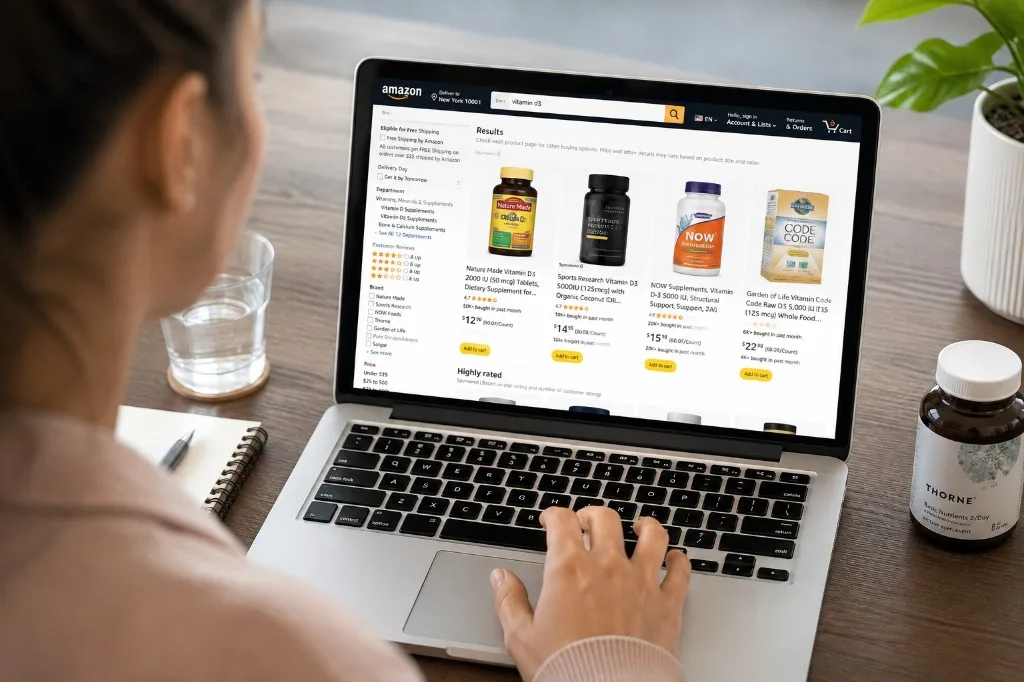
Patient Store
Your patient bought the supplement on Amazon. Now what?
Patients reorder on Amazon because the clinic missed the moment they needed another bottle. Reach them earlier, send a reorder link in the same text thread, and listen when they say why they shop elsewhere.
· 5 min read

Clinic operations
Stop chasing supplement refills by hand
Manual refill call lists fall apart when the clinic gets busy. Reach patients before the bottle is empty, send the reorder link in the same text thread, and let staff handle exceptions.
· 4 min read

Patient Store
How to reduce lost supplement and refill revenue
Refill revenue disappears between visits when patients run low and buy elsewhere. Reach them earlier, send the reorder link, and stop making staff chase everyone by hand.
· 4 min read
See it on your patients.
Two weeks free on your real patients. Habit texts on a Helose-issued number. Patients reply on iMessage.