

Between-visit care: what happens after the appointment
Plans fall apart after the patient goes home. Short check-ins, running-low messages, and staff for the replies that matter — without turning follow-up into homework or surveillance.

· 4 min read · Updated

The visit is usually the easy part.
The patient is in the room.
They are paying attention.
You can answer questions, explain the plan, and make changes in real time.
Then they go home.
That is when things get harder.
A supplement gets forgotten.
The lab kit sits on the counter.
Travel throws off the routine.
A refill runs out.
Something feels off, but not enough to call the clinic.
Then six weeks later, everyone is back in the room trying to piece together what happened.
That is between-visit care.
Most plans do not fail all at once
Patients usually do not wake up one morning and decide to stop following the plan.
It happens gradually.
They miss a few doses.
One supplement gets dropped because it is expensive.
Another tastes awful.
The meal plan gets harder during travel.
The lab never gets scheduled.
None of those things may feel important enough for the patient to call about.
But together, they can change the whole course of the plan.
And if the clinic only finds out at the next visit, a lot of time has already passed.
The longer the gap, the more you lose visibility
This matters even more in functional and integrative care because visits are often spaced weeks apart.
A patient may be doing fine for the first two weeks and completely off track by week five.
The clinic has no way to know unless the patient reaches out first.
That is a lot to ask.
Most patients are not going to send a portal message saying:
“Just wanted to let you know I have been slowly forgetting everything you told me to do.”
They just show up at the next appointment.
That is why between-visit follow-up matters.
You do not need to check on everything
Between-visit care can get overbuilt fast.
Daily surveys.
Symptom scores.
Dashboards.
Apps.
Long questionnaires.
Most clinics probably do not need all of that.
A short message at the right time can be enough.
“How are you doing with the plan this week?”
“Anything getting in the way?”
“Did you get the labs done?”
“Getting low on anything?”
You are not trying to recreate the appointment over text.
You are just trying to keep the clinic from going completely blind between visits.
The best check-in is easy to answer
If the patient has to log in, fill out twelve fields, and remember another password, you have turned a simple question into homework.
A text is different.
They can answer from the lock screen.
“Doing well.”
“Forgot a few doses.”
“Still haven’t done the lab.”
“I stopped one supplement.”
“I’m almost out.”
Now you know.
That is the useful part.
Staff should not be manually chasing everyone
The problem with between-visit care is that it often becomes another thing someone has to remember.
A coordinator keeps a list.
Someone makes calls when the office is quiet.
The process works until the clinic gets busy.
Then it disappears.
The repetitive part should not depend on memory.
The clinic can decide what messages should go out and when.
Those routine check-ins can happen automatically.
Then staff only need to step in when a reply actually needs a person.
Different clinics need different follow-up
A functional medicine clinic may care about supplement adherence and refills.
A weight-loss clinic may want to know how someone is doing between injections.
A dermatology practice may want to know whether the patient is actually using the topical treatment.
A primary care clinic may want a home blood pressure reading before the next visit.
The details are different.
The basic problem is the same.
Important things happen after the patient leaves the room.
The clinic usually hears about them too late.
Do not turn it into surveillance
There is also such a thing as too much follow-up.
Not every patient wants a weekly message.
Some people want more support.
Others want the clinic to leave them alone unless something is due.
That should be easy to respect.
Good between-visit care should make the patient feel supported, not monitored.
If the messages become constant, repetitive, or judgmental, people will stop answering.
What you are really buying is earlier information
Between-visit care is not about sending more messages.
It is about learning things sooner.
You find out the patient stopped something before the next appointment.
You know the lab never got done.
You catch the refill before the bottle is empty.
You hear about a problem while there is still time to respond.
That is the whole point.
The visit may only last an hour.
The plan has to survive everything that happens after it.
Common questions
- What is between-visit care?
- Everything that happens after the patient leaves the room: supplements, labs, refills, side effects, and the small ways a plan slips before the next appointment. Follow-up is how the clinic learns about that sooner.
- Do clinics need daily surveys and apps for between-visit care?
- Usually no. A short message at the right time is often enough. You are not recreating the appointment over text. You are keeping the clinic from going completely blind between visits.
- Who should send between-visit check-ins?
- Routine messages can go out on a schedule the clinic approves. Staff step in when a reply needs a person. The process should not depend on someone remembering to work through a list on a quiet day.
- Can between-visit texting become too much?
- Yes. Not every patient wants a weekly message. Respect opt-outs and preferences. Good follow-up should feel supportive, not like surveillance.
We cite public sources in the text where it matters. For operations and finance context only, not clinical, legal, or investment advice.
Keep reading
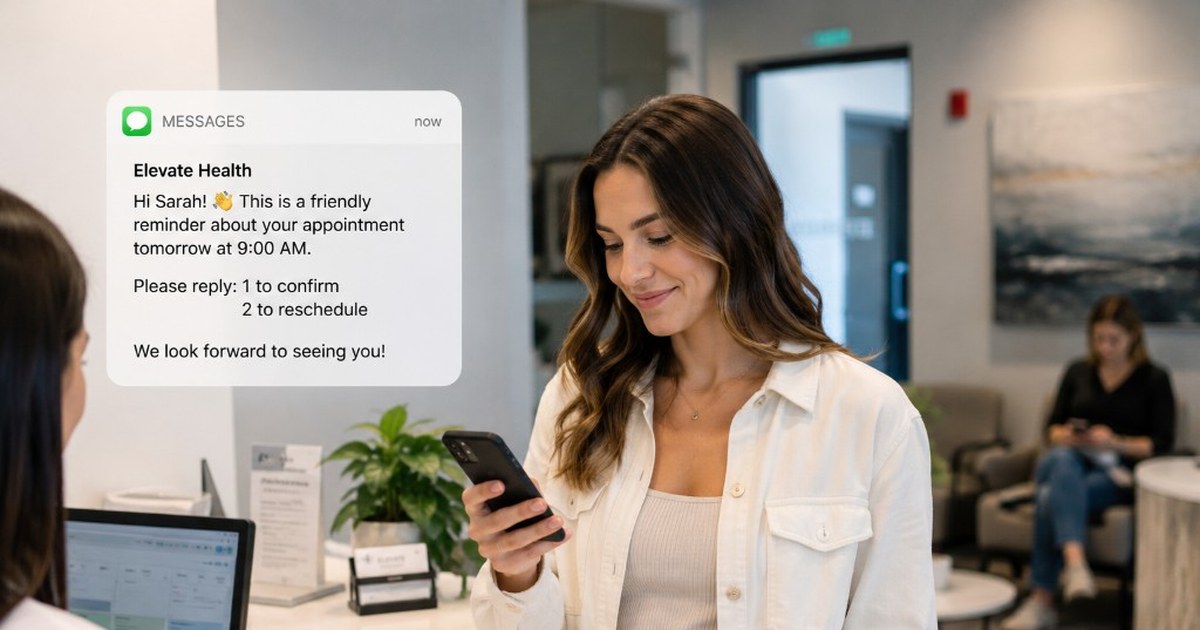
Functional medicine
Patient check-in texts for functional medicine clinics
Functional medicine plans fall apart between visits. A short weekly check-in text — not a survey or portal blast — helps clinics see what is actually happening before the next appointment.
· 4 min read
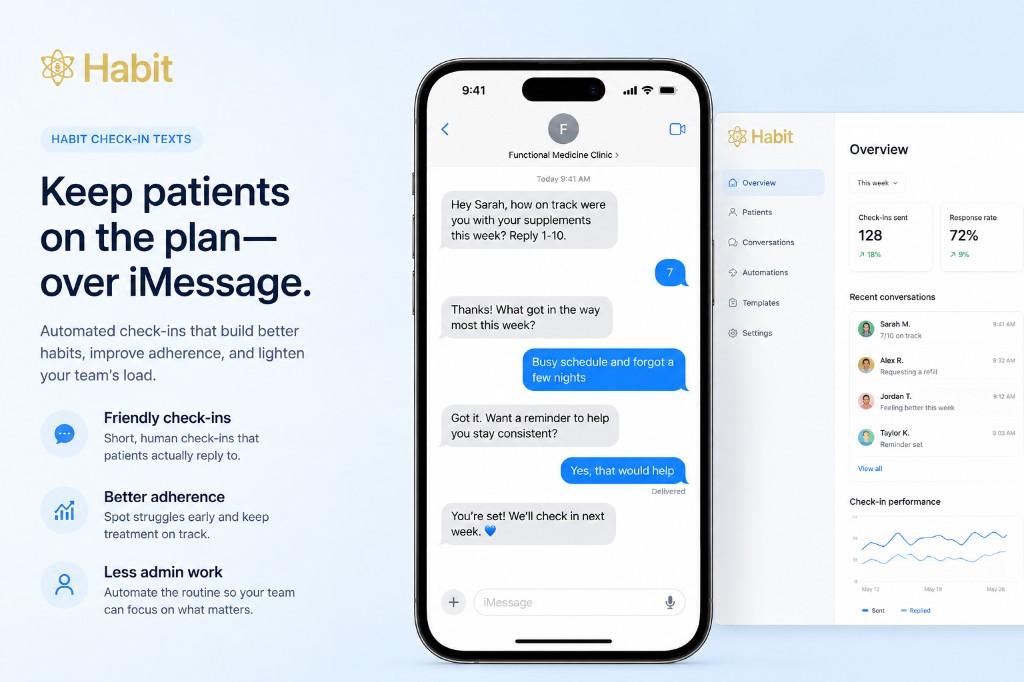
Habit
Habit check-in texts: keep patients on the plan between visits
Clinic-approved welcome, weekly check-in, and running-low texts on a schedule. Patients reply in the same thread. Staff step in when someone needs a person.
· 4 min read
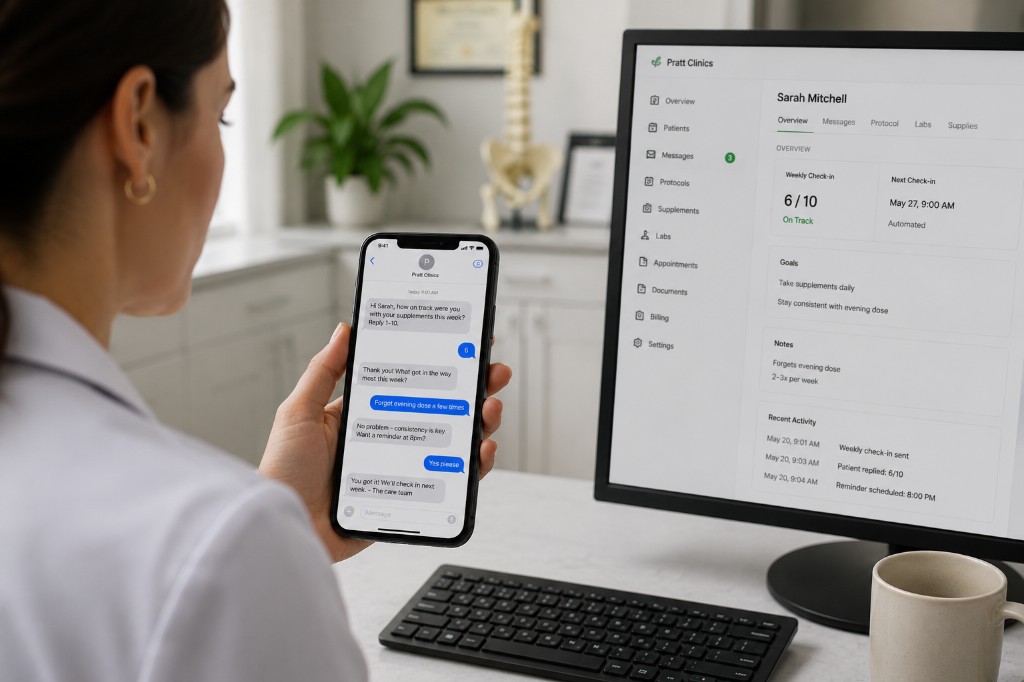
Patient texting
Automated patient follow-up without patient-facing AI
Automate welcome texts, weekly check-ins, and running-low reminders with clinic-approved copy. No chatbot. Staff step in when a reply needs a person.
· 4 min read
See it on your patients.
Two weeks free on your real patients. Habit texts on a Helose-issued number. Patients reply on iMessage.