

Patient engagement software for independent medical practices
Independent clinics do not need enterprise care-management platforms. They need patients to answer check-ins, stay on the plan, and reorder before they run out — without another full-time job at the front desk.

· 4 min read · Updated
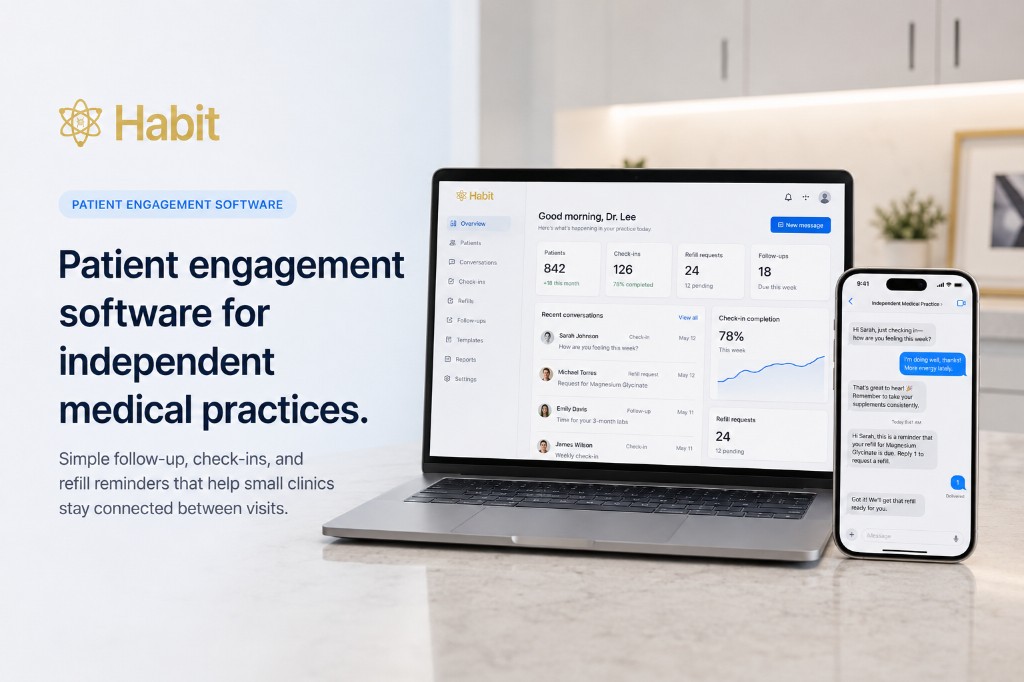
Most independent clinics do not need more software.
They need patients to actually follow through after the visit.
That usually means a few basic things:
Patients answer when the clinic checks in.
They stay on the plan.
They reorder before they run out.
Staff can see when someone needs help.
And none of it creates another full-time job at the front desk.
That is a much simpler problem than what a lot of “patient engagement platforms” are built to solve.
Small clinics do not need enterprise complexity
A six-provider clinic is not a health system.
It probably does not need a giant care-management platform with device programs, outsourced coordinators, billing workflows, and dozens of dashboards.
Those products can make sense for organizations running large care-management programs.
But if your actual problem is:
“We lose track of patients between visits,”
then you should probably solve that problem first.
Start with the patient experience
Ask one question:
What does the patient actually have to do?
If the answer is:
Download another app.
Create another account.
Remember another password.
Open a portal every week.
Complete a long form.
you are adding friction.
For short between-visit follow-up, texting is usually much easier.
The patient sees the message.
They reply.
That is it.
The clinic should control what gets sent
Patient engagement does not need to mean an AI system having open-ended conversations with patients.
For a lot of clinics, the important messages are predictable.
A welcome message.
A weekly check-in.
A running-low reminder.
A pre-visit message.
The clinic can write those once.
Staff can approve them.
Then the timing can run automatically.
That gives the clinic consistency without giving up control over what patients actually see.
Staff should not have to start every conversation
This is where a lot of systems fail.
They give the clinic an inbox.
That is useful.
But somebody still has to remember who needs to be contacted.
If the patient does not message first, nothing happens.
For between-visit care, the clinic often needs to start the conversation.
“How are you doing with the plan?”
“Getting low on anything?”
“Did you get the labs done?”
Those messages should not depend on a coordinator remembering to send them one by one.
The routine part can happen automatically.
Then staff only step in when someone actually needs them.
Reorders should be easy
If supplements are part of the clinic’s model, patient engagement and refill workflow are closely connected.
A patient should not have to hunt for the right product three weeks after the visit.
If they are getting low, the clinic can ask.
If they need more, send the store or dispensary link.
Done.
That keeps the refill connected to the same relationship instead of sending the patient off to figure it out alone.
The software should reduce staff load, not create it
This is probably the most important test.
Does the system actually make the clinic easier to run?
Or does it create another inbox, another dashboard, another login, and another workflow somebody has to manage?
Good patient engagement software should remove repetitive work.
The message goes out.
The patient replies.
The staff member sees the patients who need attention.
Everyone else keeps moving.
If the product requires another employee just to run it, it is probably too heavy for a small practice.
Your EHR can stay where it is
A between-visit engagement tool should not require the clinic to replace the systems it already uses.
The EHR stays the record.
The dispensary stays the dispensary.
The scheduling system stays the scheduling system.
Patient engagement should sit around those tools and help patients actually follow through.
That is a much easier implementation than ripping out core infrastructure.
Do not buy based on the feature list
Every software company can give you a long list of features.
AI.
Automation.
Analytics.
Integrations.
Campaigns.
Dashboards.
That does not tell you whether the product will actually help your clinic.
Instead, look at what happens on a normal Tuesday.
A patient needs a check-in.
Who sends it?
A patient replies.
Who sees it?
Someone needs a refill.
How many steps does that take?
A patient stops answering.
Does anyone notice?
Those are better questions than how many boxes are checked on a comparison sheet.
The best setup is usually pretty boring
A patient gets a normal text from the clinic.
They answer.
Routine messages happen without staff typing them manually.
Reorders are easy.
People at the clinic step in when something actually needs attention.
That is enough for a lot of independent practices.
Patient engagement software does not need to turn a small clinic into a call center or a health system.
It should just help the clinic stay present after the patient walks out the door.
Common questions
- What do independent clinics actually need from patient engagement software?
- Patients answer when the clinic checks in, stay on the plan, reorder before they run out, and staff can see when someone needs help — without creating another full-time job at the front desk.
- Should small clinics buy enterprise care-management platforms?
- Usually not. If the real problem is losing track of patients between visits, solve that first. A giant platform with device programs and billing workflows is often more than a six-provider clinic needs.
- Is an inbox enough for between-visit engagement?
- An inbox is useful, but if the patient does not message first, nothing happens. Between-visit care often needs the clinic to start the conversation on a schedule, with staff stepping in when someone needs them.
- What questions should clinics ask before buying engagement software?
- On a normal Tuesday: who sends a check-in, who sees a reply, how many steps a refill takes, and whether anyone notices when a patient stops answering. Better than shopping by feature list.
We cite public sources in the text where it matters. For operations and finance context only, not clinical, legal, or investment advice.
Keep reading
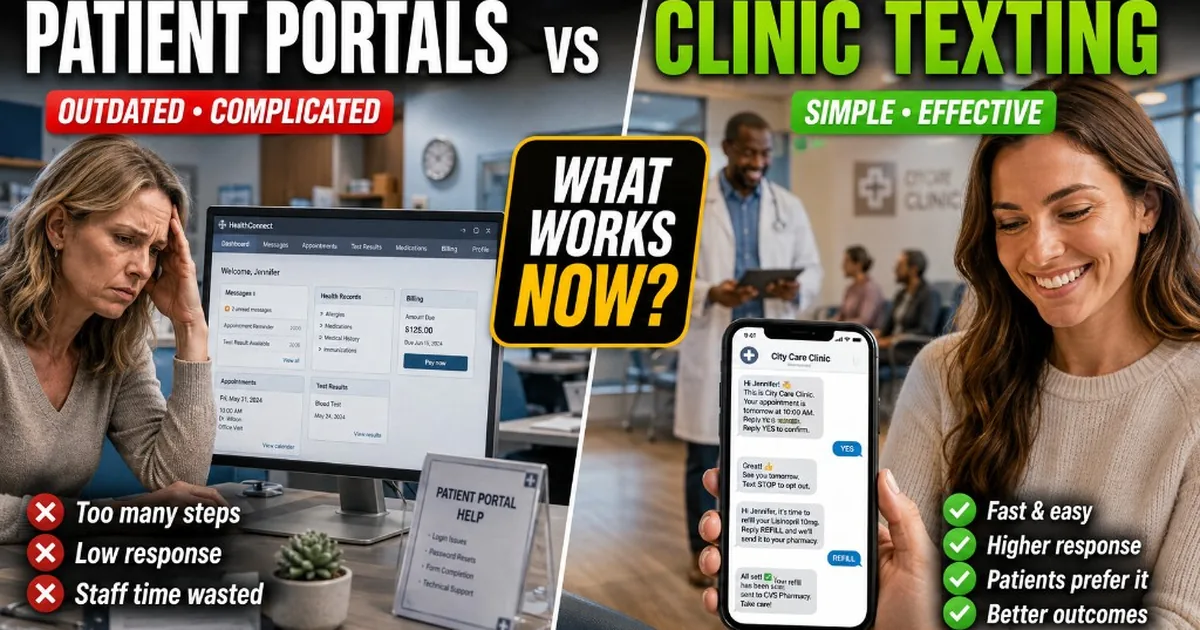
Patient engagement
Patient portals vs. clinic texting
Portals are good for labs, forms, and records. Weekly check-ins are a different job. When texting fits between visits, and how portals and text threads work together.
· 5 min read
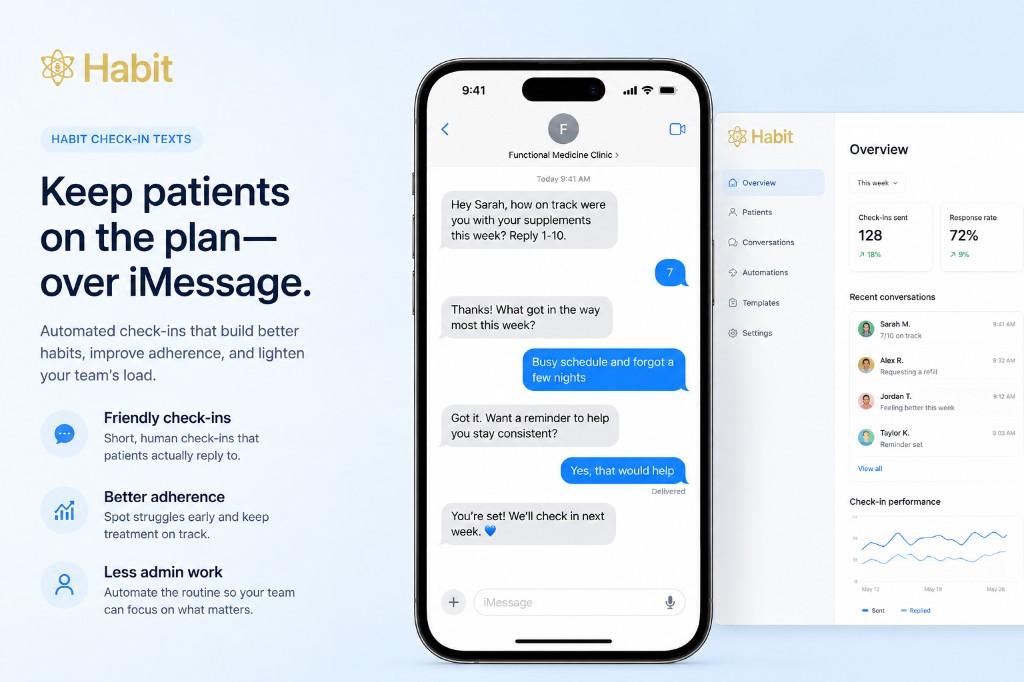
Habit
Habit check-in texts: keep patients on the plan between visits
Clinic-approved welcome, weekly check-in, and running-low texts on a schedule. Patients reply in the same thread. Staff step in when someone needs a person.
· 4 min read
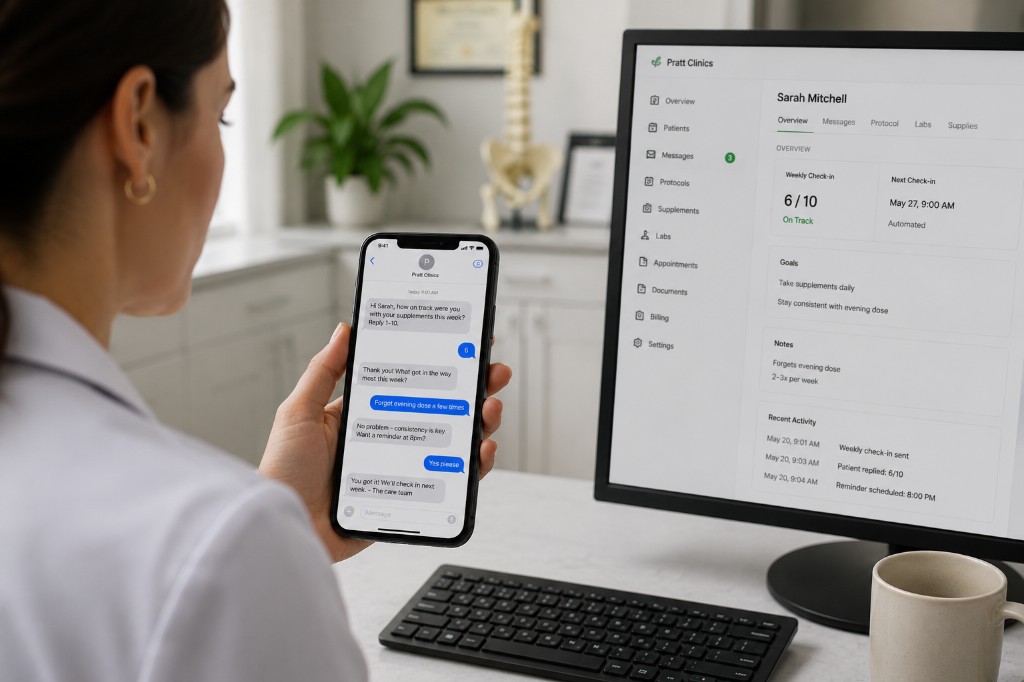
Patient texting
Automated patient follow-up without patient-facing AI
Automate welcome texts, weekly check-ins, and running-low reminders with clinic-approved copy. No chatbot. Staff step in when a reply needs a person.
· 4 min read
See it on your patients.
Two weeks free on your real patients. Habit texts on a Helose-issued number. Patients reply on iMessage.